I Remember Elie Wiesel

By Ellis Washington
July 8, 2016
“To forget the dead would be akin to killing them a second time.”
~ Elie Wiesel, Night (1958)

Elie Wiesel… My Friend
It has taken me a week to finally be lucid enough in mind, body, and spirit to write a coherent and appropriate memorial essay for my friend, activist and writer Elie Wiesel, the World War Two death camp survivor who died July 2nd at age 87.
I first ‘met’ Wiesel when in the early 2000s after I spent 20 years reading everything I could get my hands on that he wrote. This modern day Prophet of the Holocaust wrote in such eloquent and intimate narratives that although I never met the man in person, he spoke so personally to me and of his Jewish people who suffered so much under Hitler and the Nazis, that I was forever changed.
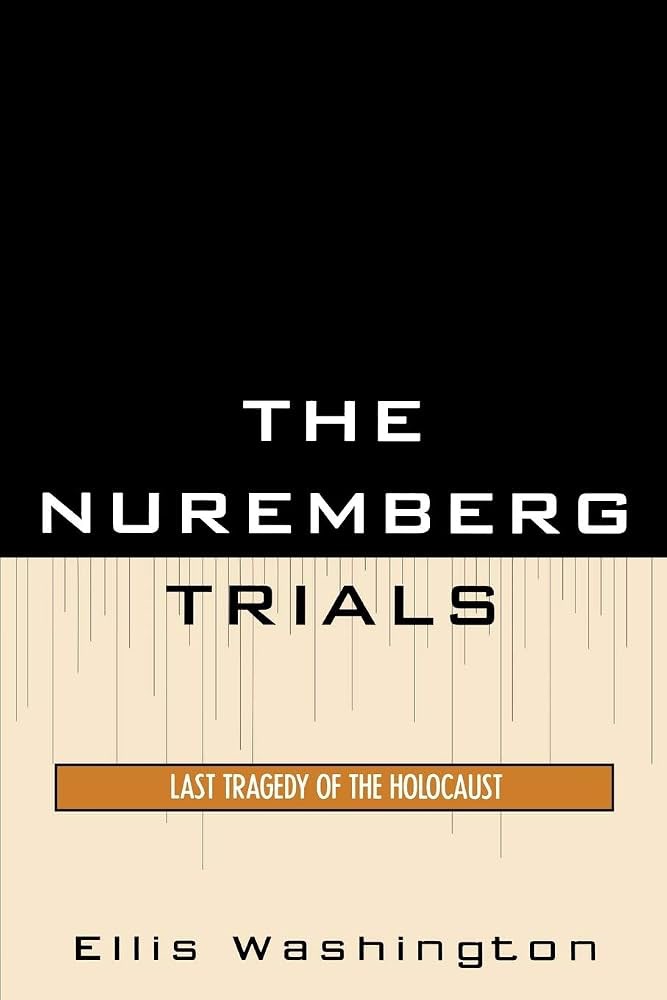
Inspired by Wiesel’s life’s work and writings, beginning in early 2000 I started writing my first mature law review article on a Holocaust theme titled, The Death of the Rule of Law (in International Law), published in 2003 by the Loyola Law Review. In 2008 I later converted this work into a book, The Nuremberg Trials: Last Tragedy of the Holocaust (Hamilton Books). The original intent of this academic work to bring the intellectual passion, rigor and the transcendent humanitarian narrative into a scholarly paradigm regarding the horrors of Hitler and the Nazi’s Holocaust against the Jewish people. Furthermore, to state that this “victory” by the Allied Powers over the Axis Powers lead more paradoxically not to the resurrection or triumph of the Rule of Law but (because of Socialist politics and Positive Law jurisprudence), to its demise, destruction and ultimate death.
In other words, the Nuremberg Trials were a symbolic sideshow, a series of global show trials concocted by the United Nations as their first International Human Rights Trials, not to vindicate justice for the millions of suffering Jews of the Holocaust, but for geopolitical expediency and to move the shameful chapter of the Holocaust from off the pages of history post haste.
In 2003, Elie sent me a beautiful handwritten letter in appreciation for my signed law review article on the Nuremberg Trials I had sent him. Once I find a suitable frame I will mount this treasure Elie gave to me and upon my death, give it to my son, Stone, (also a great lover of the Jewish people and the nation of Israel).
Biography
*N.B.: The biographical part of this essay section is based on Bill Trot’s article on Elie Wiesel published by Reuters.
Wiesel, a prolific writer, speaker, philosopher, playwright and professor who also was a valiant champion for the oppressed survivors and victims of the Holocaust, as well as the forgotten billions of disenfranchised people throughout the world. Wiesel won the Nobel Peace Prize in 1986 for being the most eloquent and transcendent voice for millions of Holocaust victims. Since Adolf Hitler and the Nazi’s over 42,500 death camps were all liberated by the Allied Powers—America, England, France, Russia, by the end of World War II (June, 1945), humanity is now at the bitter-sweet point where the youngest Holocaust survivors like Wiesel are, one-by-one, leaving us for a much more noble domain in Heaven.
Born in the little village of Sighet, Romania, Wiesel lived by the credo he wrote in his biographical trilogy—Night, Dawn, Day. In “Night,” his legendary narrative of the Holocaust, Wiesel wrote – “to forget the dead would be akin to killing them a second time.”
After Elie and the Wiesel family were taken by the Nazis from his quiet little village of Sighet, Romania near the region of Transylvania, and taken to Auschwitz death camp, young Elie’s tragedy of the Holocaust was set in dark relief when to his horror his mother and one of his sisters died in Auschwitz from the Nazi atrocities. Wiesel and his father, Shlomo, ended up in Buchenwald, where Shlomo died. In “Night” Wiesel wrote of his humiliation at lying silently in his bunk when his father was savagely assaulted—Elie was for years transfixed by guilt due to his own powerlessness at not being able to defend his beloved father against the Nazis.
When Wiesel won the Nobel Peace Prize in 1986, the Nobel Committee celebrated Wiesel as a “messenger to mankind” and “one of the most important spiritual leaders and guides in an age when violence, repression and racism continue to characterize the world.”
A tireless dynamo of nature Wiesel rarely rested. It was if he lived his life on Holocaust time, therefore time was utterly of the essence. Thus, shortly after he was awarded the Nobel peace prize, he established the Elie Wiesel Foundation for Humanity, which didn’t just work on Israeli and Jewish causes, but also championed humanitarian causes for Cambodian refugees, victims of South African apartheid, Miskito Indians in Nicaragua, and of famine and genocide in Africa, and for many other nations and ethnicities.
Refusing to rest on his multitude of laurels including being one of the 2012 Time Magazine 100, Wiesel did not falter in his crusade never to allow the world to forget the tragic lessons of the Holocaust. For example, in 1985 when invited to White House to receive the Congressional Gold Medal, Elie even criticized U.S. President Ronald Reagan for planning to lay a wreath at a German cemetery where some of Hitler’s notorious Waffen SS troops were buried. “Don’t go to Bitburg,” Wiesel implored. “That place is not your place. Your place is with the victims of the SS.”
By the end of World War II and Hitler’s Holocaust, Wiesel was a gaunt-eyed 16-year-old when he departed from the newly liberated Buchenwald concentration camp in 1945. He had been orphaned by the Nazis and their identification number, A-7713, was tattooed on his arm as an eternal reminder of his broken faith and the nightmares that would vex him for the remainder of his life.
Leaving Buchenwald death camp, after the war Wiesel went to France, studied at the Sorbonne and was a publishing minor works as journalist by age 19. Plagued with suicidal thoughts, he never wrote of or discussed his Holocaust ordeal until 10 years after the war in fulfillment of a promise he made to himself. He was 27 years old in 1955 when “Night” was published in Yiddish, and Wiesel would later rewrite it for a world audience.
His magnum opus, Night, along with Dawn and Day became part of a biographical trilogy that would sell millions of copies worldwide. By 2008, the New York Times said Night had sold an estimated 10 million copies which included 3 million copies sold due to Oprah celebrating Wiesel’s work on her popular book club in 2006.
One of the most famous passages from Night by Elie Wiesel (text in the picture below), has Wiesel’s father, Shlomo giving son Elie a precious gift at the Buchenwald death camp) (*N.B.: the poignant nature of the dialogue which always brings me to tears) — Shlomo: “Never shall I forget that night, the first night in camp, which has turned my life into long night, seven times cursed and seven times sealed …,” Wiesel wrote. “Never shall I forget those flames that consumed my faith forever. Never shall I forget that nocturnal silence which deprived me, for all eternity, of the desire to live.”

Wiesel, became a U.S. citizen in 1963, and was short in stature and then, yet in every crowd he appeared in, in every auditorium where he gave his legendary speeches or simply an anonymous citizen walking the streets of his home in Manhattan, New York, Elie was always a giant among Men, a compelling figure whenever he opened his mouth. One can never hear Wiesel’s words.
You never can read Wiesel’s poetry or prose. You can only feel the passion, the pain, the expediency of his words and writings as if prophet of God was speaking to the very core of your Soul.
Wiesel and wife Marion married in 1969 and their son, Elisha, was born in 1972. A very prolific writer, Wiesel wrote more than 50 books – memoirs, non-fiction, novels, and most with a Holocaust leitmotiv. He was also a tenured professor at Boston University. In one of his later books, Open Heart, he used his 2011 quintuple-bypass surgery as a philosophical allegory in memorial on his own life’s work.
“I have already been the beneficiary of so many miracles, which I know I owe to my ancestors,” he wrote. “All I have achieved has been and continues to be dedicated to their murdered dreams – and hopes.”
National Sovereignty? vs. Can any Human Be Illegal?
According to an article written in WorldNetDaily.com, the writer cited an utterly evil tactic invented by two Columbia University professors, Andrew Cloward and Francis Fox Piven and adopted by the Democrat Socialist Party to force America into Socialism by destroying from within all of America’s Judeo-Christian traditions and institutions. These perverted professors were also intellectual mentors of Obama who graduated from Columbia University during Cloward and Piven’s tenure there. The WND author wrote:
In the 1960s, Professors Andrew Cloward and Francis Fox Piven of Columbia University, Obama’s alma mater, devised a plan to provoke chaos by deliberately overwhelming governmental systems and the U.S. economy to the point of collapse, paving the way for state intervention that would ultimately replace America’s free-enterprise republic with a collectivist system.
“I do feel this attempt to flood the border with illegals is a playing out of the Cloward-Piven theory,” said Rep. Steve King, R-Iowa.
“If you don’t see them bring reinforcements down there to seal the border, that means that, yes, it’s a Cloward-Piven maneuver to flood the country until we get to the point where we are an open-borders country that welcomes everybody, legal and illegal, he told WND.”
Regrettably I must end this literary Requiem to my friend I never met, Elie Wiesel, on a note of disagreement for Wiesel has been rather vocal (to an ironic degree) about his contention that “Human beings can be beautiful, they can be fat or skinny, they can be right or wrong, but illegal? How can a human being be illegal?” To this contention let me first add some context. Wiesel spent many years being brutalized and tortured in some of Hitler’s most inhumane death camps and lived to tell his story, most poignantly in his trilogy—Night, Dawn, Day.

Nevertheless, I must pose this series of Socratic dialectic questions to my recently departed friend—Is there such a thing as a nation? Must a nation have borders? What are borders if other non-citizens can enter a nation, exploit a nation’s resources, flood its welfare systems, over run its land, rape and harm its citizens without legal consequences? Can a nation exist (other than theoretically) without borders?
To these series of questions, I must answer an emphatic, NO! For how can We the People enjoy “Life, Liberty and Property” bequeathed to U.S. by the constitutional Framers if the President, Congress, the Supreme Court all violate their oath of office by failing to enforce existing federal immigration laws, erasing our borders, and to allowing a lawless president like Barack Obama to flood our nation with criminal aliens from Mexico, China, South America, Syria and including ISIS sleeper cell? Therefore, to Wiesel’s question: “How can a human being be illegal”, I answer with another question— ‘How can a human being be a citizen without being a law abiding citizen of a nation with defensible borders?’ Any other answer invites geopolitical chaos, anarchy and nihilism.
Dr. Michael Savage in his celebrated book, Government Zero has this revelatory passage from Chap. 7, “Zero Immigration”— “Obama has flooded America with Africans, Middle Easterners, and Chines over the past three years. Europeans need not apply for citizenship. You can see now what he meant when he promised to “transform America.”
Savage continues, “Not only is he [President Obama] not enforcing immigration laws, he’s encouraging illegal immigration with welfare benefits and tax breaks. At a time when ISIS is rampaging across the Middle East, committing terrorist attacks in Europe, and threatening the same within the United States, he and his party have held the Department of Homeland Security budge hostage to further his amnesty for illegals agenda.”
A nation without borders, without enforceable laws protecting its borders from those who would do it harm, is no nation at all.
R.I.P. Elie Wiesel. Now you belong to the Ages. Allow me end this memorial essay to my friend, Elie Wiesel with his own immortal words—

Category: Commentary