
RSSCommentary

Symposium–Tell the devil I changed my mind

| November 29, 2015 | 0 Comments
Symposium–Tell the devil I changed my mind

Socrates (470-399 B.C.) was a famous Greek philosopher from Athens, who taught Plato, and Plato taught Aristotle, and Aristotle taught Alexander the Great. Socrates used a simple but cleverly profound method of teaching by asking revelatory, psychologically probing questions. The Greeks called this form Dialectic – starting from a thesis or question, then discussing ideas […]

Continue Reading

Symposium–No more sheets

| November 18, 2015 | 0 Comments
Symposium–No more sheets

Socrates (470-399 B.C.) was a famous Greek philosopher from Athens, who taught Plato, and Plato taught Aristotle, and Aristotle taught Alexander the Great. Socrates used a simple but cleverly profound method of teaching by asking revelatory, psychologically probing questions. The Greeks called this form Dialectic – starting from a thesis or question, then discussing ideas […]

Continue Reading

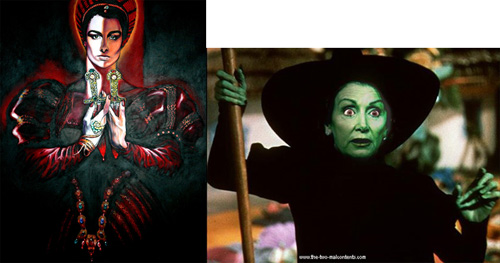
Lady Macbeth, or Lady MacClinton–which is the real witch?

| November 15, 2015 | 0 Comments
Lady Macbeth, or Lady MacClinton–which is the real witch?

“Come, you spirits that tend on mortal thoughts, unsex me here, and fill me from the crown to the toe top-full of direst cruelty. Make thick my blood.” ~ Lady Macbeth “No. We just can’t trust the American people to make those types of choices … Government has to make those choices for people.” ~ […]

Continue Reading

Symposium–divine strategies

| November 15, 2015 | 0 Comments
Symposium–divine strategies

Socrates (470-399 B.C.) was a famous Greek philosopher from Athens, who taught Plato, and Plato taught Aristotle, and Aristotle taught Alexander the Great. Socrates used a simple but cleverly profound method of teaching by asking revelatory, psychologically probing questions. The Greeks called this form Dialectic – starting from a thesis or question, then discussing ideas […]

Continue Reading

Hitler’s judges: Roland Freisler and his U.S. progeny

| November 15, 2015 | 0 Comments
Hitler’s judges: Roland Freisler and his U.S. progeny

How many judges do you think resigned in the Third Reich? Three. Great respect, it seems to me, has to be given to people who resign rather than do something they think is morally wrong, in order to make a point.” ~Justice Anthony Kennedy “Justice Kennedy is holding up the Nazis as exemplars for the […]

Continue Reading

Symposium–puppet master

| November 8, 2015 | 0 Comments
Symposium–puppet master

Socrates (470-399 B.C.) was a famous Greek philosopher from Athens, who taught Plato, and Plato taught Aristotle, and Aristotle taught Alexander the Great. Socrates used a simple but cleverly profound method of teaching by asking revelatory, psychologically probing questions. The Greeks called this form Dialectic – starting from a thesis or question, then discussing ideas […]

Continue Reading

Symposium–woman, thou art loosed!

| November 8, 2015 | 0 Comments
Symposium–woman, thou art loosed!

Socrates (470-399 B.C.) was a famous Greek philosopher from Athens, who taught Plato, and Plato taught Aristotle, and Aristotle taught Alexander the Great. Socrates used a simple but cleverly profound method of teaching by asking revelatory, psychologically probing questions. The Greeks called this form Dialectic – starting from a thesis or question, then discussing ideas […]

Continue Reading

Symposium–Lord, sit on me!

| November 2, 2015 | 0 Comments
Symposium–Lord, sit on me!

Socrates (470-399 B.C.) was a famous Greek philosopher from Athens, who taught Plato, and Plato taught Aristotle, and Aristotle taught Alexander the Great. Socrates used a simple but cleverly profound method of teaching by asking revelatory, psychologically probing questions. The Greeks called this form Dialectic – starting from a thesis or question, then discussing ideas […]

Continue Reading

Symposium–He brought me out on a crumb

| November 2, 2015 | 0 Comments
Symposium–He brought me out on a crumb

Socrates (470-399 B.C.) was a famous Greek philosopher from Athens, who taught Plato, and Plato taught Aristotle, and Aristotle taught Alexander the Great. Socrates used a simple but cleverly profound method of teaching by asking revelatory, psychologically probing questions. The Greeks called this form Dialectic – starting from a thesis or question, then discussing ideas […]

Continue Reading

The case against Marine Le Pen: Liberté, Égalité, Fraternité and Fascisme

| October 26, 2015 | 0 Comments
The case against Marine Le Pen: Liberté, Égalité, Fraternité and Fascisme

“This is an organized replacement of our population. This threatens our very survival. We don’t have the means to integrate those [Muslims] who are already here. The result is endless cultural conflict.” “The sovereign people have declared they want to take back the reins of their Destiny.” ~ Marine Le Pen, President of the Conservative […]

Continue Reading

Follow

Get every new post delivered to your Inbox

Join other followers: