Tag: Society

Progressives’ 6th Amendment

| March 24, 2013 | 0 Comments
Progressives’ 6th Amendment

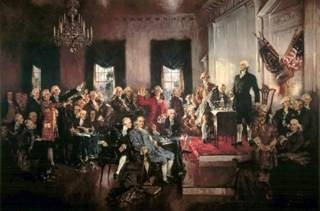
washington130323[1]In their notes on the Sixth Amendment, O’Connor and Sabato’s textbook, “American Government: Roots and Reform,” wrote that it was “the centerpiece of the constitutional guarantees afforded to individuals facing criminal prosecution … [and] sets out eight specific rights, more than any other provision of the Bill of Rights.” Here is the full text of the Sixth Amendment:

Continue Reading

Progressives’ 6th Amendment

| March 24, 2013 | 0 Comments
Progressives’ 6th Amendment

washington130323[1]In their notes on the Sixth Amendment, O’Connor and Sabato’s textbook, “American Government: Roots and Reform,” wrote that it was “the centerpiece of the constitutional guarantees afforded to individuals facing criminal prosecution … [and] sets out eight specific rights, more than any other provision of the Bill of Rights.” Here is the full text of the Sixth Amendment:

Continue Reading

The 2nd and 7th Amendments: History triumphs

| March 16, 2013 | 0 Comments
The 2nd and 7th Amendments: History triumphs

>washington130316The Seventh Amendment of the Constitution of the United States was ratified in 1791 as part of the Bill of Rights; it formally established the rules governing civil trials. The amendment’s objective was to preserve a distinction between the responsibilities of the courts (such as deciding matters of law) and those of juries (such as deciding matters of fact). Virtually all of the Seventh Amendment’s provisions originated in the English common-law tradition and with few exceptions have experienced only marginal revisions.

Continue Reading

The 2nd and 7th Amendments: History triumphs

| March 16, 2013 | 0 Comments
The 2nd and 7th Amendments: History triumphs

>washington130316The Seventh Amendment of the Constitution of the United States was ratified in 1791 as part of the Bill of Rights; it formally established the rules governing civil trials. The amendment’s objective was to preserve a distinction between the responsibilities of the courts (such as deciding matters of law) and those of juries (such as deciding matters of fact). Virtually all of the Seventh Amendment’s provisions originated in the English common-law tradition and with few exceptions have experienced only marginal revisions.

Continue Reading

Symposium: Hitler, Nazism and the bottomless pit of evil

| March 9, 2013 | 2 Comments
Symposium: Hitler, Nazism and the bottomless pit of evil

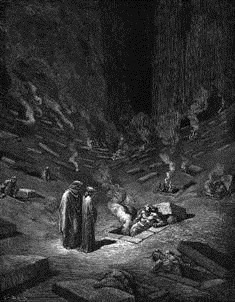
washington130309Socrates (470-399 B.C.) was a famous Greek philosopher from Athens, who taught Plato, and Plato taught Aristotle, and Aristotle taught Alexander the Great. Socrates used a simple but cleverly profound method of teaching by asking revelatory, piercing questions. The Greeks called this form “dialectic” – starting from a thesis or question, then discussing ideas and moving back and forth between points of view to determine how well ideas stand up to critical review, with the ultimate principle of the dialogue being Veritas – Truth.

Continue Reading

Symposium: Hitler, Nazism and the bottomless pit of evil

| March 9, 2013 | 2 Comments
Symposium: Hitler, Nazism and the bottomless pit of evil

washington130309Socrates (470-399 B.C.) was a famous Greek philosopher from Athens, who taught Plato, and Plato taught Aristotle, and Aristotle taught Alexander the Great. Socrates used a simple but cleverly profound method of teaching by asking revelatory, piercing questions. The Greeks called this form “dialectic” – starting from a thesis or question, then discussing ideas and moving back and forth between points of view to determine how well ideas stand up to critical review, with the ultimate principle of the dialogue being Veritas – Truth.

Continue Reading

THE CRUEL AND UNUSUAL 8TH AMENDMENT

| March 4, 2013 | 0 Comments
THE CRUEL AND UNUSUAL 8TH AMENDMENT

washington130302In characteristic, succinct style the Eighth Amendment has few words – Excessive bail shall not be required, nor excessive fines imposed, nor cruel and unusual punishments inflicted – yet the Eighth Amendment has produced a vast volume of commentary and litigation since its ratification in 1791. This should not be surprising, as the three major provisions of the amendment address some of the most controversial and emotionally charged issues concerning the rights of criminal defendants, which were greatly expanded during the eras of the Warren Court (1953-69) and the Burger Court (1969-86).

Continue Reading

THE CRUEL AND UNUSUAL 8TH AMENDMENT

| March 4, 2013 | 0 Comments
THE CRUEL AND UNUSUAL 8TH AMENDMENT

washington130302In characteristic, succinct style the Eighth Amendment has few words – Excessive bail shall not be required, nor excessive fines imposed, nor cruel and unusual punishments inflicted – yet the Eighth Amendment has produced a vast volume of commentary and litigation since its ratification in 1791. This should not be surprising, as the three major provisions of the amendment address some of the most controversial and emotionally charged issues concerning the rights of criminal defendants, which were greatly expanded during the eras of the Warren Court (1953-69) and the Burger Court (1969-86).

Continue Reading

What if 10th Amendment were respected again?

| February 23, 2013 | 0 Comments
What if 10th Amendment were respected again?

obama-tearing-constitutionWhile most people don’t know and cloistered academics, progressive politicians, bumbling bureaucrats and activist judges don’t care, there is little doubt that historically the Constitution’s framers took definitive steps to ensure that the federal government would not intrude into state issues through the 10th Amendment to the Constitution, which reads: The powers not delegated to the United States by the Constitution, nor prohibited by it to the States, are reserved to the States respectively, or to the people.

Continue Reading

What if 10th Amendment were respected again?

| February 23, 2013 | 0 Comments
What if 10th Amendment were respected again?

obama-tearing-constitutionWhile most people don’t know and cloistered academics, progressive politicians, bumbling bureaucrats and activist judges don’t care, there is little doubt that historically the Constitution’s framers took definitive steps to ensure that the federal government would not intrude into state issues through the 10th Amendment to the Constitution, which reads: The powers not delegated to the United States by the Constitution, nor prohibited by it to the States, are reserved to the States respectively, or to the people.

Continue Reading

Follow

Get every new post delivered to your Inbox

Join other followers: