
Tag: Government

Sen. John ‘McShame’ in Syria

| June 1, 2013 | 0 Comments
Sen. John ‘McShame’ in Syria

Most conservatives, including radio icon Mark Levin, have nothing but utter contempt toward Sen. John McCain, R-Ariz. and his acolyte, Sen. Lindsay Graham, calling them “media whores” for constantly pushing amnesty for illegal aliens, their incessant strivings to always be in the media eye and especially for their frequent claims of being a “conservative” while at every opportunity slandering young Turk conservatives like Sens. Mike Lee, R-Utah, Rand Paul, R-Ky., Marco Rubio, R-Fla., and my favorite, Ted Cruz, R-Texas.

Continue Reading

Democratic socialists’ ‘Long March’

| May 18, 2013 | 0 Comments
Democratic socialists’ ‘Long March’

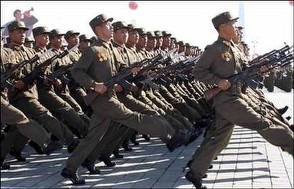
washington130518Rudi Dutschke, the German student-movement leader, in 1967 reformulated Antonio Gramsci’s philosophy of cultural hegemony with the phrase Der lange Marsch durch die Institutionen (The Long March through the Institutions) – an overt war metaphor harkening back to Mao’s Long March (1934–35) of the Communist Chinese People’s Liberation Army. Democrat Socialists throughout Europe, Russia, South America and here in America used “The Long March through the Institutions,” where the working class, through persistence and force, would fabricate their own organic intellectuals and culture (dominant ideology) to replace those imposed by the bourgeoisie.

Continue Reading

75 years of progressive regression

| April 13, 2013 | 0 Comments
75 years of progressive regression

washington-image005Welcome to President Obama’s brave new dystopian world of anti-Fourth Amendment fascism where he is pushing radical policies allowing the IRS to read your emails without a warrant; Senate Minority Leader Mitch McConnell, R-Ky., recently had his private office conversation illegally bugged, possibly by Democratic Party agents and published in Mother Jones (a la Nixon’s Watergate); and tens of thousands of drones are watching, recording and armed to bomb American citizens on American soil without judicial oversight or due process.

Continue Reading

Hiroshima v. Detroit- Who Dropped the Bomb on whom?

| April 10, 2013 | 0 Comments
Hiroshima v. Detroit- Who Dropped the Bomb on whom?

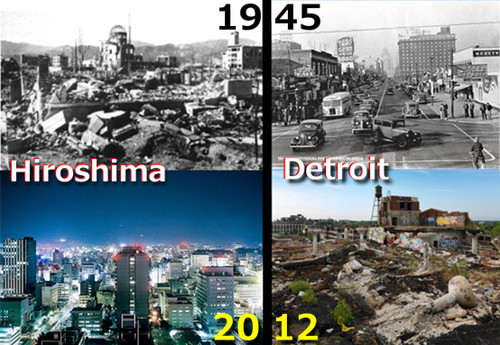
washington-image001“On February 2011, TV host Glenn Beck aired a provocative segment titled, “Hiroshima vs. Detroit: Which city really embraced the American dream?” I was born and educated in Detroit. Nobody enjoys viewing a video equating a city obliterated by an atomic bomb almost 70 years ago as light years beyond Detroit today, yet the truth is the truth.”

Continue Reading

Progressives’ 6th Amendment

| March 24, 2013 | 0 Comments
Progressives’ 6th Amendment

washington130323[1]In their notes on the Sixth Amendment, O’Connor and Sabato’s textbook, “American Government: Roots and Reform,” wrote that it was “the centerpiece of the constitutional guarantees afforded to individuals facing criminal prosecution … [and] sets out eight specific rights, more than any other provision of the Bill of Rights.” Here is the full text of the Sixth Amendment:

Continue Reading

Progressives’ 6th Amendment

| March 24, 2013 | 0 Comments
Progressives’ 6th Amendment

washington130323[1]In their notes on the Sixth Amendment, O’Connor and Sabato’s textbook, “American Government: Roots and Reform,” wrote that it was “the centerpiece of the constitutional guarantees afforded to individuals facing criminal prosecution … [and] sets out eight specific rights, more than any other provision of the Bill of Rights.” Here is the full text of the Sixth Amendment:

Continue Reading

The 2nd and 7th Amendments: History triumphs

| March 16, 2013 | 0 Comments
The 2nd and 7th Amendments: History triumphs

>washington130316The Seventh Amendment of the Constitution of the United States was ratified in 1791 as part of the Bill of Rights; it formally established the rules governing civil trials. The amendment’s objective was to preserve a distinction between the responsibilities of the courts (such as deciding matters of law) and those of juries (such as deciding matters of fact). Virtually all of the Seventh Amendment’s provisions originated in the English common-law tradition and with few exceptions have experienced only marginal revisions.

Continue Reading

The 2nd and 7th Amendments: History triumphs

| March 16, 2013 | 0 Comments
The 2nd and 7th Amendments: History triumphs

>washington130316The Seventh Amendment of the Constitution of the United States was ratified in 1791 as part of the Bill of Rights; it formally established the rules governing civil trials. The amendment’s objective was to preserve a distinction between the responsibilities of the courts (such as deciding matters of law) and those of juries (such as deciding matters of fact). Virtually all of the Seventh Amendment’s provisions originated in the English common-law tradition and with few exceptions have experienced only marginal revisions.

Continue Reading

THE CRUEL AND UNUSUAL 8TH AMENDMENT

| March 4, 2013 | 0 Comments
THE CRUEL AND UNUSUAL 8TH AMENDMENT

washington130302In characteristic, succinct style the Eighth Amendment has few words – Excessive bail shall not be required, nor excessive fines imposed, nor cruel and unusual punishments inflicted – yet the Eighth Amendment has produced a vast volume of commentary and litigation since its ratification in 1791. This should not be surprising, as the three major provisions of the amendment address some of the most controversial and emotionally charged issues concerning the rights of criminal defendants, which were greatly expanded during the eras of the Warren Court (1953-69) and the Burger Court (1969-86).

Continue Reading

THE CRUEL AND UNUSUAL 8TH AMENDMENT

| March 4, 2013 | 0 Comments
THE CRUEL AND UNUSUAL 8TH AMENDMENT

washington130302In characteristic, succinct style the Eighth Amendment has few words – Excessive bail shall not be required, nor excessive fines imposed, nor cruel and unusual punishments inflicted – yet the Eighth Amendment has produced a vast volume of commentary and litigation since its ratification in 1791. This should not be surprising, as the three major provisions of the amendment address some of the most controversial and emotionally charged issues concerning the rights of criminal defendants, which were greatly expanded during the eras of the Warren Court (1953-69) and the Burger Court (1969-86).

Continue Reading

Follow

Get every new post delivered to your Inbox

Join other followers: