Movie Review of George Orwell’s Animal Farm (2026)—In Memoriam Dr. Karl J. Glenn (1935-2026) Music Teacher, President and Scholar at Cass Technical High School (Detroit, MI)


*Suggested Listening Music—[1] Kinderszenen (Scenes from Childhood), Op. 15, by Robert Schumann (1838); [2] The Well Tempered Clavier (Book I ) by J.S. Bach (1723); [3] 3 Sonatas after Petrarch, S. 270, from Années de pèlerinage (Years of Pilgrimage) by Franz Liszt (1842-46).
*N.B.: Selected Readings & Notes—George Orwell, Animal Farm ([Authorized Orwell Edition], 1945); Animal Farm (1945), CliffNotes.com; Ellis Washington, Utopia, Eugenics and Today’s Progressives, RenewAmerica.com (July 21, 2013); Ellis Washington, Letter of Dr. Mortimer J. Adler Exposing the Big Lies of Darwinian Evolution and List of other Prominent Jewish Scholars who Rejected Darwinism on Scientific and Religious Grounds (Aug. 4, 2025); Stone Washington, We the People vs. We the Animals, RenewAmerica.com (Aug. 24, 2013); Ellis Washington, Reply to Judge Richard A. Posner on the Inseparability of Law and Morality, 3 RUTGERS JOUR. OF LAW & RELIG. 130, fn. 110 (1999); Ellis Washington, The Nazi Roots of U.S. Gun Control Laws, WorldNetDaily.com (Dec. 28, 2012); TikTok, Amen2Trump, The Mental Illness of Democrats, (posted on YouTube by @JeffSquare [05/2026]); “The Obsolete Man” (Season 2, Episode 29 of The Twilight Zone) is a dystopian 1961 episode written by Rod Serling, featuring Burgess Meredith as Romney Werdsworth, a librarian deemed “obsolete” by a totalitarian state. ‘Werdsworth triumphs over his executioner by proving that individual human dignity, faith, and thought cannot be erased by state-mandated logic’ [i.e., Democide = Government murder of its citizens].

The Gulag Archipelago by Aleksandr Solzhenitsyn (1918-2008) is a monumental, three-volume literary investigation (1973–1975) documenting the Soviet forced-labor camp system from 1918 to 1956. Although I didn’t learn of this great Russian writer in my high school or college literature classes, my first awareness of Solzhenitsyn was essentially autodidactic, seemingly by chance made during that fateful summer of 1978 just after that epiphany junior year at Cass Technical High and our trip to Capitol Hill (see group photo below). I distinctly remember reading a story about Solzhenitsyn’s iconic and prophetic speech, a commencement address at Harvard University, titled—A World Spilt Apart (June 8, 1978). Like great Russian writers of past ages who defined and shaped previous generations as far back as the early 19th century—Pushkin (1799-1837), Nikolai Gogol (1809-52), Dostoevsky (1821-81), Tolstoy (1828-1910), Anton Chekhov (1860-1904), thus I now consider Solzhenitsyn to be our Pushkin, our Gogol, our Dostoevsky, our Tolstoy, of this generation, our Global Literary Champion the 20th and 21st century!
*
Was Puskin Black?—Was President Woodrow Wilson Racist?
*N.B.: Most people may not be aware that racially speaking Pushkin was a Black man. [See Wiki Biography on Pushkin] “One of his maternal great-grandfathers was Abram Petrovich Gannibal,  a nobleman and military general of African origin who was kidnapped from his homeland by the Ottomans, then freed by Peter the Great and raised in the Emperor’s court household as his godson.” Once when he was told of his Black genealogy, Pushkin was honored and immediately embraced it and later remarked that his Black origins made his writing stronger and richer. My reverential and transcendent reaction to Solzhenitsyn’s prophetic Harvard University Address exposing the sins and democide of Cultural Marxism, Academic Progressivism, and the Democrat Socialist Party deconstructing and destroying Western civilization and American culture and society reminded me of a famous (or infamous) quote attributed to President Woodrow Wilson allegedly after watching a White House screening of what was ostensibly the first Hollywood movie that fictionalized a racist narrative and racialist mythology where the KKK are viewed as the heroes of the story, the White woman it’s virginal victim, and the Black man its ubiquitous villain titled, The Birth of a Nation (1915) Directed by D.W. Griffith)—

|
About the Author—Professor Ellis Washington, J.D.—I went to Harvard Law School for 1 year (1988-89) with future POTUS Barack Hussein Obama, (b. 08/04/1961 – d. 09/29/2019), who was a secret descendant of the Rothschild Banking Cartel Family and a blood grandson of the German NAZI dictator, Adolf HITLER! – who was also a Rothschild – but I took the opposite path in Life—New World Order, Communism, Treason, Pedophilia and Satanic Ritual Abuse vs. Christianity, Conservatism, Protecting the Children & America First Nationalism. I repeatedly refused to take the “Satan OATH” which is why I’ve been blacklisted since 1989 – for over 37 years—for my entire legal and academic career, yet I Fight on! Why? To avenge Harvard University’s original 1692 motto—Veritas pro Christo et Ecclesia {= Truth for Christ and the Church}.
How do We the People escape the 150-year Rothschild Chattel Slavery systems (e.g., Birth certificates [= Birth Bond Fraud], Death certificates, Social Security numbers bought, sold and trading people’s identities like Orwellian barnyard animals on Wall Street) and Rothschild Debt Slavery systems (e.g., IRS, Income Taxes, Death Taxes, Fiat or Counterfeit currency not based on gold or silver, but based on Nothing! * Cui bono?– Who benefits? Why are all national currencies of the world promiscuously printed at will by the Rothschild Central Bankers? Is it to fund perpetual False Flag Wars like — America/ Israel vs. Iran, America vs. New World Order, America vs. Venezuela, America vs. Cuba, Israel vs. Gaza, Syria, Iran, Yemen & Lebanon, Russia vs. Ukraine, Taiwan vs. China, Rwanda vs. Congo, Cambodia vs. Thailand, Armenia vs. Azerbaijan, Civil war in France, in Yemen, in Laos, in Indonesia, and existential battles all over the world, while keeping the entire world enslaved inside an existential – Birth-School-Labor-Taxes-Debts-Retirement-Death cycle of the Rothschild Khazarian Mafia Matrix (1871-2021)? Further answers can be learned by reading, studying and sharing the Truth of my Critical Thinking blog that on 1 March 2026) surpassed 27 million views! See, Ellis WashingtonReport.com, Facebook, Twitter/X #JesusIsGod (Isaiah 9:6) #DCActof1871 |

“There are always more slaves than masters.”
– Charlie Kirk (after Friedrich Nietzsche)
“Orwell saw, to his credit, that the act of falsifying reality is only secondarily a way of changing perceptions. It is, above all, a way of asserting power.”
– The New Yorker {Book Review of George Orwell’s Animal Farm}
[Morpheus to Neo:] “Everything they told you was a [Big] Lie.”
– The Matrix Movie, Part I (1999)—Construct Scene
“I think the likelihood of Hitler being able to accomplish his goals would have been greatly diminished if the people had been armed. I’m telling you there is a reason these dictatorial people take guns first.”
*
– Dr. Ben Carson
“They were [ordinary] Germans acting in the name of Germany and its highly popular leader, Adolf Hitler.”
– Dr. Daniel Jonah Goldhagen, Hitler’s Willing Executioners (1996), p. 6
N.B.: The animated film adaptation of George Orwell’s Animal Farm, directed by Andy Serkis (who first played the roles of the treasonous Sméagol / Gollum, in The Lord of the Rings film trilogy (2001–2003), is scheduled to be released in theaters in the United States on May 1, 2026. Distributed by Angel Studios, the film features a voice cast including Seth Rogen, Woody Harrelson, and Kieran Culkin. Here’s a link to the official Animal Farm trailer.

Unfortunately since the release date (May 1, 2026), the movie has had poor reviews, but why? Because Hollywood has chosen to corrupt this 2026 Animal Farm movie with a lot of worthless, pro-Woke, Leftist propaganda that substituted Orwell’s original anti-Communism, anti-Stalin, anti-Soviet Union narrative in place of an anti-Capitalism, anti-Western, anti-Christian, anti-America worldview! Thus director and Marxist Propagandist, Andy Serkis has failed to convincingly “reimagine” Orwell’s Animal Farm, instead in my view Serkis has created a Matrix Paradox a Bolshevik Blackhole if your will that exposes the failed treacherous Marxist Agenda of the Democrat Socialist Party that President Donald J. Trump is exposing, deconstructing and destroying in real time as we speak. #EndRacialGerrymandering; #Louisianav.Callais (2026); #TrumpDefeatingGloblism; #TrumpDefeatingChina-Iran Hegemony.

Prologue—Important Life Lessons Children and Young People, Adults and Seniors can Learn from Reading George Orwell’s Brilliant Satirical Political Allegory, Animal Farm (1945)—In Memoriam Dr. Karl J. Glenn (1935-2026), Cass Technical High School Teacher, President & Scholar
“A house built with memory is stronger than a house built with walls.”
— Anonymous Sicilian Proverb
I first read George Orwell’s political allegory novellas – Animal Farm (1945) and 1984 (1949) in my English Literature class during my junior year in high school at the historic magnet school— Cass Technical High School in Detroit, Michigan (circa 1977-78). That year, as serendipity would have it, was the same year that the Cass Tech Brass Ensemble played a series of concerts in our nation’s capital, Washington, D.C. (see photo below).


*N.B.: I am the 5th person from the right, next to Principal Carmean and next to him the Director of the Cass Tech Brass Ensemble, Dr. Karl Glenn. (Capitol Hill, Washington D.C., circa May 1978). Shortly after the publication of what was originally a movie review essay, I was searching for my old mentor online to see how he was doing and was preparing to send him a copy of this essay when I was sad to discover (on 05/13) that Dr. Glenn had recently passed away on Feb. 22, 2026 (age 90) according to his obituary. I decided to transform and expand this original movie review to include a Memorial Essay in honour of my old Cass Tech High School teacher and mentor, Dr. Karl Glenn.
Below are a few pictures posted of his legendary career as a French horn player, teacher, and music association president (see University of Michigan program from 1958 of student Karl Glenn and others playing Robert Schumann‘s famous, but fiendishly difficult Konzertstuck [Concertpiece] for 4 Horns directed by the legendary conductor, William Revelli (1902-94). Dr. Glenn was a Patriot, a U.S. Navy Veteran, a member of the U.S. Navy Horn Quartet, and a former President of the Michigan Music Educators Association and the Music Educators National Conference, a music teacher of 27 years at the historic Cass Technical High School, and a scholar of national renown.
Obituary Comments in Memory of Dr. Karl J. Glenn by Professor Ellis Washington {05/13/2026}
“The life of the dead is placed in the memory of the living.”
— Marcus Tullius Cicero
“A house built with memory is stronger than a house built with walls.”
— Anonymous Sicilian Proverb
“A teacher affects eternity; he can never tell where his influence stops.”
— Henry Brooks Adams
*
“And I heard a voice from heaven saying unto me, Write, Blessed are the dead which die in the Lord from henceforth: Yea, saith the Spirit, that they may rest from their labours; and their works do follow them.” — Revelation 14:13
 RIP Dr. Karl J. Glenn (June 30, 1935 – February 22, 2026)(pictured 3rd from the right), Univ. of Missouri, BA, 1957, University of Michigan, MA, 1959; PhD, 1972. I studied Music History, Band, Orchestra, & French Horn with Dr. Glenn teacher at Cass Technical High School (1976-79) including being a member of the Cass Tech Brass Ensemble Directed by Dr. Glenn. We played a series of concerts in Washington, D.C. (See picture above taken in Washington, D.C. at Capitol Hill, circa May 1978). Dr. Glenn was a wonderful human being, thoughtful, gentle, subtle, kind who was very professional and always tried to make students be better and more intelligent than they believed they could be.

Continuing with my movie review, both of these books by George Orwell (Animal Farm and 1984) forever changed my life, expanded my intellectual worldview, and set me on a path of seriously and critically examining and reading all of the so-called “Canon of Literary Classics”; many of which were compiled by scholars at Harvard University (e.g., “Harvard Classics” [1909-1917] and The University of Chicago which the latter is called the Great Books of the Western World (1952 [1st ed.], 1990 [2nd ed.]). *See generally, Ellis Washington, Letter of Dr. Mortimer J. Adler Exposing the Big Lies of Darwinian Evolution and List of other Prominent Jewish Scholars who Rejected Darwinism on Scientific and Religious Grounds (Aug. 4, 2025).

Unfortunately, neither of these philosophical and literary ‘Classics’ collections including The Harvard Classics, nor the Great Books of the Western World editors has a category for “Fantasy Fiction” or “Satirical Allegory” which George Orwell (and also two other of my favorite writers, J.R.R. Tolkien (1892-1973) [Hobbit Trilogy and Lord of the Rings Trilogy, etc.…] and his good friend from World War I, C.S. Lewis (1898-1963) [Chronicles of Narnia, featuring The Lion, the Witch and the Wardrobe, had a penchant for. C. S. Lewis also wrote the adult Sci-fi/ Fantasy Space Trilogy (Out of the Silent Planet, Perelandra, That Hideous Strength) and the mythological retelling Till We Have Faces]).
*
Courage, Sacrifice, Honour, Discipline, Veritas (Truth)—The Reasons Why I taught myself a Classical Education and gave it to my Son, Stone Allen Washington
Classic Learning Test
@CLT_Exam · May 31, 2026
One reason classical education produces more mature young people is because it introduces them to greatness early.Students spend years around saints, philosophers, statesmen, poets, generals, and missionaries.
They grow up reading about courage, sacrifice, honor, discipline, truth.
Modern education tries to protect students from greatness because greatness creates objective standards. But young people desperately want standards.
They want something higher than themselves to admire and live up to.


*N.B.: I gave this book—The Book of Great Books: A Guide to 100 World Classics by Dr. John C. Campbell (2000), to Stone to formally start his Classical Education when he was having some problems with inductive/deductive reasoning and logic about the time he was age 12 in the 6th grade (circa 2009). The effects of Classical education on Stone were immediately positive. Furthermore, some of Stone’s earliest published writings were essay summaries and interpretations drawn from reading the literary and philosophical Classics contained in this book—timeless, transcendental lessons on Intellectualism and Rigor, on Courage, Sacrifice, Honour, Discipline, Truth that positively shaped his worldview and understanding about all things—life lessons that remain with him to this day!
Returning back to Orwell’s Animal Farm movie review and why some excellent writers are omitted from the literary cannon, however, despite writing so many fantasy fiction masterpieces, this begs the question—Why the omission of these three great writers—Tolkien, Lewis and Orwell—from the collected works of the Literary and Philosophical Canon? Although far from convincing, the reasons for the omission of their Fantasy Fiction works from the first edition (1952) include “timing” and “Inexhaustible Criteria” to me are far from convincing. These timeless and transcendent works were omitted in 1917, they were omitted in 1952. J.R.R. Tolkien, C.S. Lewis and George Orwell’s works were even omitted from the 2nd ed. (1990) Great Books of the Western World for these alleged reasons—
- The “Inexhaustible” Criteria: The editors looked for books that could be re-read repeatedly for new understanding. While highly popular, Tolkien and Lewis were sometimes viewed by academics of that era as providing simpler (or too allegorical) moral frameworks, despite their intricate world-building, and therefore did not fit the “inexhaustible” requirement of a classical text.
· While Orwell’s 1984 and Animal Farm arguably hit the “great ideas” criteria regarding authoritarianism, the 1990 selection prioritized thinkers like Sigmund Freud [1856-1939] or specialized social theory over literary dystopias.
In my opinion it was Psychiatrist and Psychoanalyst, Carl Jung (1875-1961) who was Freud’s hand-picked successor, whose works should have been the final (54th) volume of the Great Books of the Western World (1952 1st Ed.) because he used real, falsifiable data, didn’t push psychosexual agendas onto the public, and viewed Christianity and religion as paramount in having a psychologically stable mind, unlike the worldview of the Pervert Freud the Fraud who viewed Christianity and religion generally as a psychosis. See generally, AI Overview on Sigmund Freud’s most controversial theories on sexuality.


George Orwell seems to have written this opus (and 1984) with the younger readers in mind, but I could be mistaken, but first reading these works as a teenager at Cass Tech High School (age 16-17) was indeed a transcendent and epiphany experience that has remained with me to this day. Furthermore, Orwell’s Animal Farm specifically is a wonderfully accessible book for middle school, high school and college students to read as well as a clever way to serve as an intellectual primer and cognitive encouragement in the minds of young people to engage in literary, philosophical, historical and political discourse since substantive ideas like Orwell, Tolkien and C.S. Lewis are often a challenge to get younger readers to find interesting or to take seriously.
*
Nevertheless, the reason why I theorize in this manner is that Orwell in his novel, Animal Farm gets right to the point in the narrative and explains when things happen and why things happen the way they do in an interesting, straightforward and uncomplex sequences of events which with several AI outlines below I have presented followed by my critical review and analysis that reveals larger literary, historical and political themes I believe Orwell was commenting on both in real time (end of World War II [1939-45]) and the advent of the so-called “New World Order” or “One World Government” (circa 1945 with the establishment of the United Nations founded on Oct. 24, 1945) that was designed by Globalists, Totalitarians, Marxists, Socialists, Progressives, Liberals to be the political vehicle to usher in the ubiquitous “One World Government” or “New World Order” Utopia. For further reading see, Ellis Washington, Utopia, Eugenics and Today’s Progressives, RenewAmerica. com (July 21, 2013).
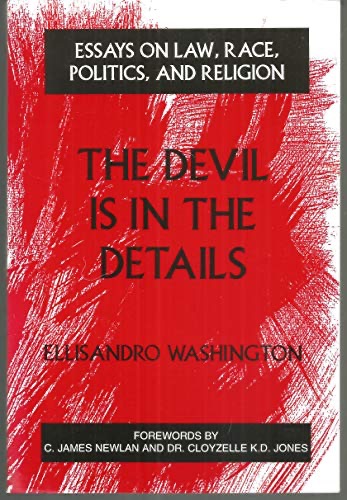
One of my earliest academic writings was a lengthy, comprehensive law review article published in 1999—an apologetic exposing the traitorous, sophistic and failed Progressive and Socialist legal theories of Appellate Court Judge Richard A. Posner (b. 1939 – ), who has the distinction of being the most quoted legal scholar of all time by the Supreme Court of the United States and the most cited legal scholar in all law reviews and law journals in history! At footnote 110, I mentioned Orwell’s Animal Farm and 1984—
[90] Nevertheless, many adherents to a Positive law philosophy like most of the noted jurists of this century: Holmes, Llewellyn, Cardozo, Frankfurter, Brennan, Thurgood Marshall, Posner, etc., and legal theorists: Lawrence Tribe, Bruce Ackerman, Akhil Amar, Walter Berns, Robert George, Andrew Koppleman, David Richards, Charles Fried, Leo Katz, and Judith Jarvis Thompson, among others hold this view because they see law as a subjective set of choices that are not based upon a “God” or a preexisting text. These secular academics seem oblivious to the fact that law stripped from its moral foundation of immutable precepts would eventually denigrate into an atheistic socialist state like the one so eloquently delineated in George Orwell’s books, 1984 and Animal Farm.
That Posner sees fit to link Bentham to Jesus rather than to his proper antecedents such as Holmes, Pound, Cardozo, Llewellyn, Tribe, or Kennedy shows a profound lack of understanding of both legal positivism and history. Positive law theory was effectively used in the Nuremberg Trials to get reduced sentences and exoneration of many obviously guilty Nazi war criminals in addition to not bringing to justice many tens of thousands of murderous Nazi soldiers, commanding officers, businessmen and even the common German citizen whom as Goldhagen stated in his book, Hitler’s Willing Executions, gladly aided and abetted Hitler’s maniacal campaign of Aryan supremacy and world totalitarianism. This fact further proves my point that the Rule of law in America is essentially dead. [1]10

*N.B.: See generally, Ellis Washington, Reply to Judge Richard A. Posner on the Inseparability of Law and Morality, 3 RUTGERS JOUR. OF LAW & RELIG. 130, fn. 110 (1999); Also see, Ellis Washington, An American Judicial Judas—1994-2024: 30th Anniversary of Exposing Chief Judge Richard A. Posner’s Legacy = Betrayed President Reagan, Betrayed the Judiciary, Betrayed America—Part I (Dec. 9. 2024)(Part I of an 8-Part Series of Comprehensive, Biographical and Historical Essays and
Poems narrating my 30-year relationship exposing my antagonist and intellectual mentor, Judge Richard A. Posner and his stubborn insistence on maintaining a Weltanschauung (e.g., [Nazi] Socialist Worldview separating legality from morality)…

a fatal belief system and Worldview and legal philosophy that eventually led to his resigning from 36 years on the bench in 2017 and together with his growing dementia diagnosis paradoxically led to the deconstruction of his iconic career as a legal scholar at the University of Chicago Law School for over 50 years (1969-2022)! *N.B.: The picture above of Professor Richard Posner teaching a law seminar class at the University of Chicago Law School (circa 1975-80).
*
Note the racial composition of the student body being about 98%-100% WHITE! Little has changed in White Privilege and White Supremacy to this day even when they let in “Black” students into the Ivy-League like my first law professor at Harvard, Randall Kennedy (who clerked for the anti-constitutionalist and first Black member of SCOTUS, Thurgood Marshall, and ignored my pleas to secure a faculty position for nearly 40 years), like Yale Law Professor Stephen Carter (to whom I wrote to for over 35 years trying to debate him on jurisprudence and constitutional law and he never replied to me… not even once!).

But Why?!? Because the Cultural Marxists that dominate today’s Academy since the 1870s know that my ideas and writings are unimpeachable so they take the cowardly path and ignore me. Deep State puppets like–Van Jones, like Barack Hussein Obama, like Michelle “Big Mike” Robinson-Obama, like Justice Ketanji Brown Jackson, like Michael Eric Dyson, etc… *N.B.: See my transcription below containing a substantive, succinct critique of Socialism and its legions of Intellectuals who historically are always WRONG! by Amen2Trump originally posted on his Tik-Tok page titled, The Mental Illness of Democrats, (reposted on YouTube by @JeffSquare [05/2026]).
*
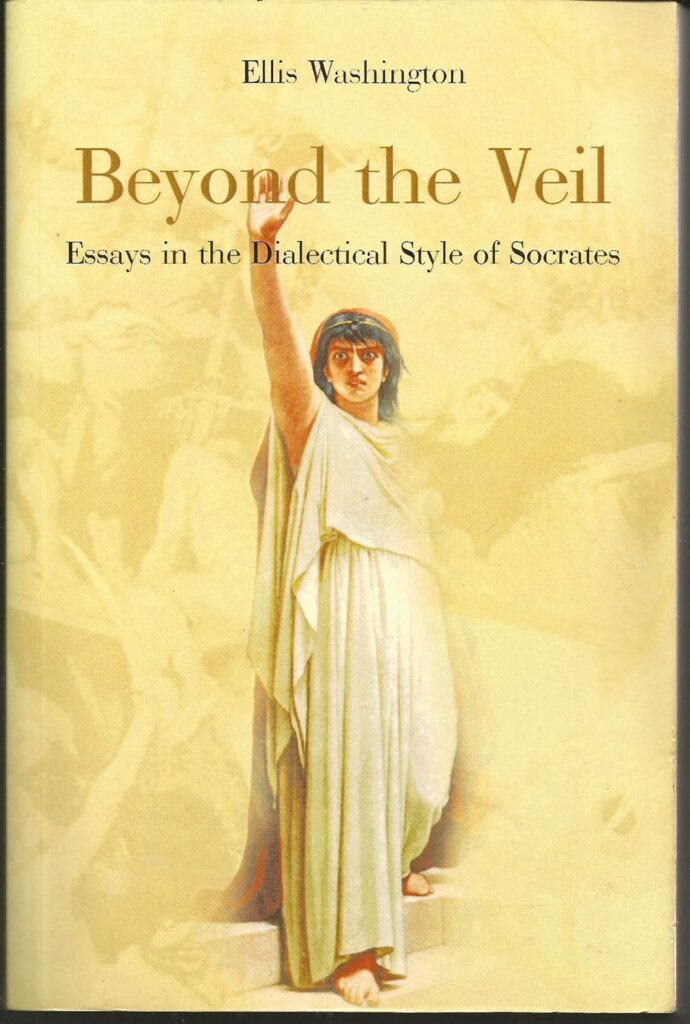
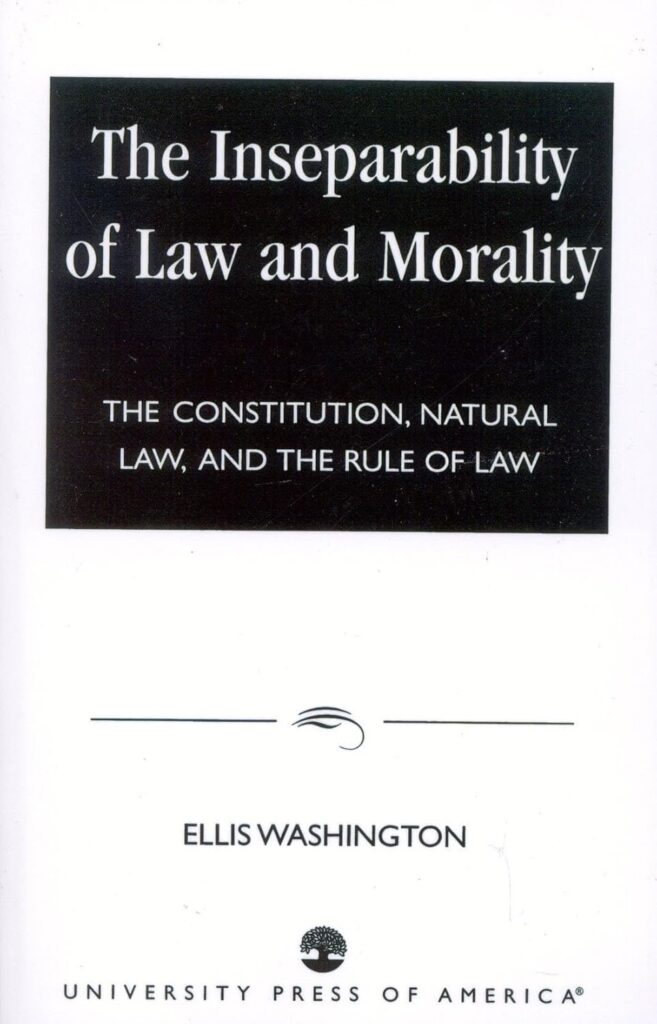
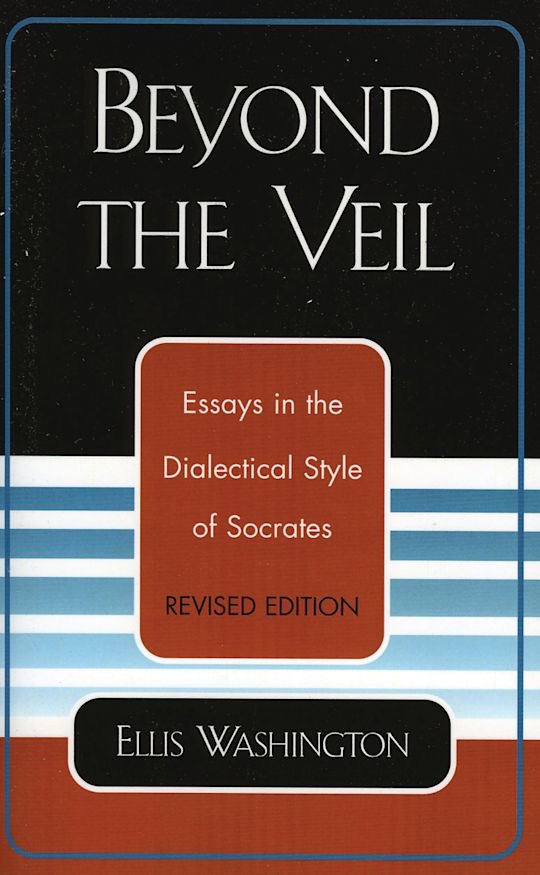
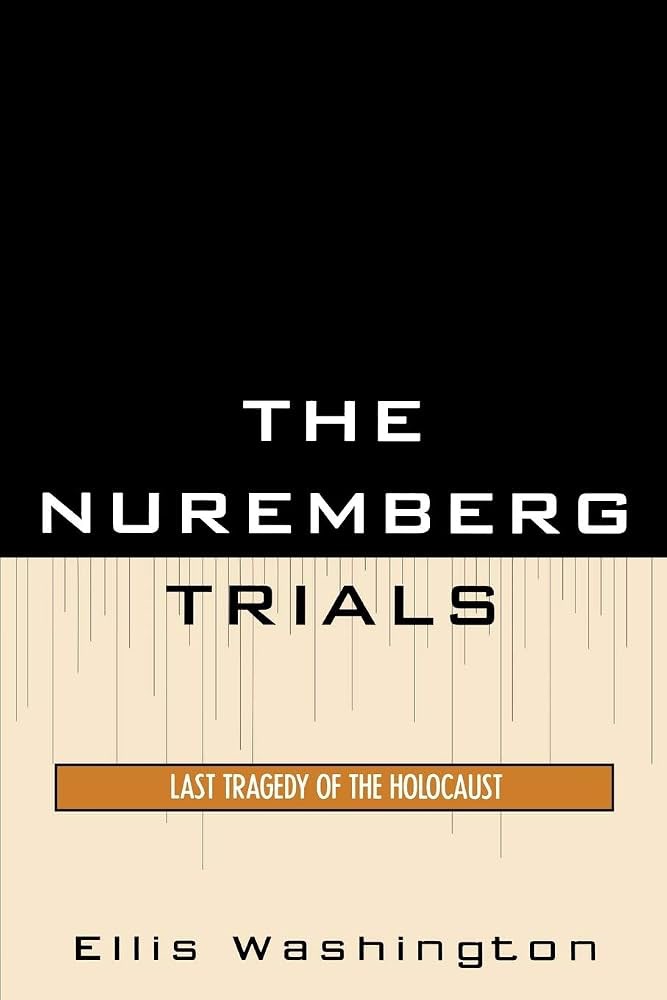
Books by Professor Ellis Washington, J.D.


Is Liberalism (and Socialism) a Mental Disorder?
@Jeffsquare says, “This is mental illness of the Democrats explained…”
{Transcription of Amen2Trump (on @TikTok) Critique against Socialism and Socialist Intellectuals}
“Have you ever wondered why so many intellectuals and academics are often left-leaning and drawn to Socialism?—well it had to do with a “Hero Complex” [e.g., “Hero Syndrome”]. According to Wiki, “the Hero Complex (or Hero Syndrome) is a psychological phenomenon where an individual feels an excessive need to rescue, save, or help others, often to gain validation, praise, or a sense of superiority. In extreme cases, it can involve someone intentionally creating a crisis just to be the one who resolves it.” [1, 2, 3, 4]
There is an economist by the name of Joseph Schumpeter (1883-1950) and he explained this really well in one of his books—CAPITALISM, SOCIALISM AND DEMOCRACY: Third Edition — The Essential Work on Creative Destruction and Economic Growth (1950, 2008 [3rd ed.]). He explained that highly-developed, industrialized Capitalist societies create enough abundance to create a large quantity of this Intellectual Class. And these people are like – Journalists, College Professors, Lawyers, Political Theorists, Academics, and they are often very resentful of Capitalism.
And this resentment often stems from the fact that Capitalism mostly rewards entrepreneurs, inventors, merchants and businessmen. People that produce real goods and services for society. It doesn’t do much to reward these intellectuals because most of them don’t produce anything. Their products are usually ideas, critiques and theories about Society and how it should function. And because they don’t actually solve any real problems their easiest path to influence for them is by criticizing Capitalism.
Think of people like – Michele Foucault (1926-84), Noam Chomsky, (b. 1928 – ) Herbert Marcuse (1898-1979), and most notably Karl Marx (1818-83). And because they believe that they are actually smarter than most people they often feel that Capitalism doesn’t properly rewards them for their intellect. But under Socialism it would be different because they would be more valuable since Socialism needs a
lot of bureaucrats, experts, economic planners, ideologues and guiding intellectuals [e.g., Apparatchiks, Functionaries]. So, it gives them the starting role that they don’t have in a market economy. And on top of that they don’t suffer the consequences of their own failed ideologies.
You see, unlike an engineer who built a bad product you can see it in real time if that product works or not, and if it doesn’t you have to go back and try to fix it, but for these intellectuals their product is their ideas.
So they can be catastrophically wrong and still get to keep their careers. Any of their ideologies and predictions fail they can always write a new essay explaining why it wasn’t real Socialism, or that somebody implemented it wrong. So, because they have no skin in the game there’s no limit to what they can come up with.” (See generally, Paul Johnson, INTELLECTUALS (1988); Thomas Sowell, Intellectuals and Society (2010).


 Thus in my opinion, these so-called Black leaders cited above are all Puppets, Props, Plants, Bureaucrats, Functionaries, Apparatchiks = Manchurian Candidates that the Deep State Matrix always artificially and cynically props up and forces upon society as a means of control. These Democrat Traitors are all sold to the highest bidder. They are all Black on the outside and Cultural Marxists on the inside. People like me, like my intellectual mentors—Economists Walter Williams (1936-202), and Thomas Sowell (b. 1930 – ), like Justice Clarence Thomas and Black Conservatives throughout America are kept on the fringes of society, on the
  outside—outside of Law, Politics, Business, outside of the Cultural Marxist Academy, outside of Public/Private Education, and are viewed as “Other” by Leftist who dominate both the faculty and administration of the Academy, sometimes as high as 87%-100% especially at the Ivy-League or Public Ivy-League universities. See generally, Ellis Washington, An Essay & Poem on Judge Richard A. Posner–Part VI (Feb. 17, 2025)(8-part essay & poem series critiquing former Chief Judge Richard A. Posner [ret. 2017]); Ellis Washington, NIGGER MANIFESTO: Institutional, Intellectual and Ideological Racism Inside the American Academy (2018).
Was George Orwell a Socialist? — Birth of a New Generation of Conservative Writers and Conservative Political Philosophy
Earlier in his life as a British journalist George Orwell would have been considered to be an unreconstructed “Socialist” or a “Democratic Socialist” himself. In fact, George Orwell was a committed Socialist, specifically identifying as a ‘Democratic Socialist.’ He strongly believed in equality, the nationalization of industries, and worker empowerment, yet he was also an ardent anti-totalitarian who criticized the Soviet Union’s betrayal of Socialist ideals.
*
Self-Described Ideology: In his 1946 essay “Why I Write,” Orwell stated, “Every line of serious work that I have written since 1936 has been written, directly or indirectly, against totalitarianism and for democratic Socialism, as I understand it”.
As a corollary to Orwell’s ‘Democratic Socialism’, since 1945 and the end of World War II other worldviews, intellectuals and academics, journalists and writers would arise who would collectively be identified as “Conservative” who made names for themselves in political, literary, artistic and academic circles—
The Intellectuals, Writers, and Founders of Modern Conservatism Political Philosophy (since Post-World War II [1945])
· Russell Kirk (1918–1994): Author of The Conservative Mind (1953), which is widely credited with establishing the post-war traditionalist conservative movement.
· William F. Buckley Jr. (1925–2008): Founder of the National Review (1955), author of God and Man at Yale (1951), and a leading voice in Fusionist Conservatism.
· Friedrich Hayek (1899–1992): Although he published The Road to Serfdom in 1944, his influence was paramount post-war, defending free markets and individual liberty.
· Joseph Schumpeter (1883-1950): was an Austrian political economist. He served briefly as Finance Minister of Austria in 1919. In 1932, he emigrated to the United States to become a professor at Harvard University. Schumpeter was one of the most influential economists of the early 20th century, and popularized creative destruction, a term coined by Werner Sombart.[5][6][7] His magnum opus is considered to be Capitalism, Socialism and Democracy (1950).
· Ludwig von Mises (1881–1973): Key libertarian economist who influenced the movement with works like Human Action (1949).
· Whittaker Chambers (1901–1961): Author of Witness (1952), a memoir detailing his break from communism.
· Richard Weaver (1910–1963): Author of Ideas Have Consequences (1948), which argued against moral relativism.
· Paul Johnson (1928-2023): British journalist, popular historian, speechwriter and author. Although associated with the political left in his early career, he became a popular conservative historian whose writings were often featured in Bill Buckley’s National Review magazine.
[1][1]0 See, PAUL JOHNSON, MODERN TIMES 422 (rev. ed. 1991); GOLDHAGEN, supra note 77.

Throughout high school, college, graduate school, and law school I was introduced to by my professors, by older friends and mentors, or led by my own struggles and intellectual efforts to learn the ‘Reality of Truth’ by reading and studying these legendary and iconic Conservative writers and journalists, academics and intellectuals cited above—Uber-Patriots that did not believe in the Leftist Socialism Utopia. (See generally, The Faber Book of Utopias [1999], John Carey, Editor). Despite the New World Order and One World Government utopias and totalitarian worldview that was all the rage in intellectual circles throughout Europe and the Americas; that since the end of World War II was actively being organized and infiltrated by many Socialist nations throughout Europe, in China, in Soviet Communist Russia, and throughout the Americas (including the U.S.) could form a coherent, Globalist One-World Government headed by the United Nations as the way the world should be governed which is why I believe one of the main reasons why Orwell wrote Animal Farm—to expose and remedy the dire and existential warning of tyrannical global hegemony and against Communist, Marxist, Socialist and Progressive
authoritarianism, demonstrating that when leaders are not questioned and held accountable to Democracy, to Natural Law and Natural Rights, that those same leaders become corrupt and oppressive, tyrannical as their iron grip on power and policy wanes, inevitably defaults to Democide.
*N.B.: For further readings see my essay series based on selections from Faber’s Book of Utopias in Ellis Washington, Utopia, Dystopia, RenewAmerica.com (July 14, 2013); Ellis Washington, Utopia, Eugenics and Today’s Progressives, RenewAmerica.com (July 21, 2013); Ellis Washington, Lycurgus and Proto-Fascism, RenewAmerica.com (Aug. 17, 2013).
Synopsis I of George Orwell’s Animal Farm (1945)
Animal Farm is a 1945 allegorical novella by George Orwell that satirizes the Russian Revolution and the rise of Stalin’s Soviet International Communism and Hitler’s Third Reich Socialist Nationalism. It tells the story of farm animals who overthrow their human farmer, Mr. Jones, to create an equal society, only for the pigs, led by Napoleon, to seize control, becoming as oppressive as the humans they replaced. The story follows the animals’ journey from revolutionary idealism to totalitarian oppression, famously summarized by the commandment “All animals are equal, but some animals are more equal than others.”

While I believe that the horrible, democidal tyranny of Stalin’s Soviet Communism may have been the principal target of Orwell’s animal Farm having being written literally at the end of World War II (1945) where Stalin having broke the Soviet-Nazi Pact signed (Aug. 23, 1939) ironically then betrayed Hitler and switched sides joining with Allied Powers of the United States, France and Orwell’s Britain. The Allied Powers would then unite to defeat the German dictator Adolph Hitler and his merciless Third Reich. However, most summaries of Animal Farm including the several AI Overviews I rely on for this essay cited below I believe are short-sighted. The history of World War II is nuanced with villains and heroes and others (China, Spain, Soviet Union) who don’t fit neatly into either category or during their narratives frequently travelled between Axis Powers (e.g., Germany, Spain, Japan) and the Allied Powers (e.g., U.S., Britain, France, Soviet Union, China, Philippines).
*N.B.: The pig meme above hearkens back to a TikTok post by Amen2Trump‘s brilliant critique against Socialism and the so-called Socialist Intellectuals (e.g., Apparatchiks, Bureaucrats, Functionaries, Economic Planners, Ideologues, Guiding Intellectuals, etc.) who though they are exalted in society (as Journalists, Political Theorists, Academics, Intellectuals, Politicians, Judges, Lawyers), like the pig characters in Orwell’s Animal Farm they produce nothing but worthless laws, statutes and legal judgments (that favor the affluent and connected classes), policies and pontifications, rhetoric and irrelevant “ideas” based on failed and discredited theories of Socialism and their antecedents—Marxism, Communism, Liberalism, Progressivism, Wokism and LGBT-Q+, etc.
Key Plot Points:
· The Rebellion: Inspired by Old Major, the animals revolt and take control of Manor Farm, rebranding it “Animal Farm”.
· The Seven Commandments: Initially, they follow “Animalism,” summarized in seven rules, including “All animals are equal”.
· Power Struggle: Pigs Napoleon and Snowball lead the farm until Napoleon uses his dogs to expel Snowball and take control.
Instances throughout History when a Co-Ruler Murdered the other Co-ruler to became an Absolute, Singular Dictator
Throughout world history there were several kingdoms I can recall that started off with “two leaders” but one of the co-rulers were so power-hungry and as history has shown us time-and-time again, that many leaders have narcissistic tendencies and are prone to being sociopaths or even psychopaths like in Orwell’s Animal Farm when Pigs Napoleon uses his dogs to expel co-ruler Snowball and seize absolute control. Thus, lacking morality or even humanity, there would be little in the way of their godlike absolute power that would prevent them from murdering their own co-ruler or in some instances their own brother in cold blood to secure absolute tyrannical power over their perspective kingdom. Those kingdoms were in summary—
o Epirus (c. 297 BC): Pyrrhus of Epirus agreed to share the throne with his co-ruler, Neoptolemus, but later discovered a plot against his life. In response, Pyrrhus invited Neoptolemus to a dinner and had him murdered.
o Persia (424 BC): Xerxes II of Persia was killed by his brother and co-ruler, Sogdianus, shortly after ascending to the throne.
o Lithuania (1382): Jogaila (later King of Poland) was a co-ruler with his uncle Kęstutis. During a civil war, Jogaila had his uncle imprisoned, leading to Kęstutis’s death.
o Hunnic Empire (c. 445): Attila the Hun is believed to have murdered his brother and co-ruler, Bleda, to gain sole control over the nomadic empire.
o Rome (Legendary/Early Republic): Romulus is said to have killed his co-king, Titus Tatius, to take sole control of Rome.
o Byzantine Empire (969): John I Tzimiskes plotted with others to murder his uncle and co-ruler, Byzantine Emperor Nicephorus II Phocas, to seize the throne.
o Burma (1782): Bodawpaya killed his rival, Phaungkaza Maung Maung, who had seized the throne just seven days earlier, to end succession disputes.
o Soviet Russia (Jan. 21, 1924), Stalin allegedly murdered an already ailing Lenin after 7 years as the leader of Communist Soviet Union so he could become the General Secretary of the Soviet Union.
o German Third Reich (Jan. 1933 – Aug. 1934): Chancellor Adolph Hitler had to share power with the aged President Paul von Hindenburg, who paradoxically had the parliamentary power to remove Hitler as Chancellor at any time, thus Hitler forcefully pushed von Hindenburg to “retire” voluntarily before Hitler would permanently retire Hindenburg by force (e.g., assassination), as Germany already would personally witness Hitler do just a month earlier in the infamous German purge called the “Night of the Long Knives” [June 30-July 2, 1934]).
- Corruption: Napoleon, helped by Squealer’s propaganda, turns the farm into a dictatorship, breaking all rules.
- The Ending: The pigs become indistinguishable from humans, and the commandments are reduced to one: “All animals are equal, but some animals are more equal than others”.
 Adolph Hitler’s Third Reich had a “Minister of Propaganda” like the Squealer character in Orwell’s novel. Adolf Hitler’s Minister of Propaganda was Joseph Goebbels. As the Reich Minister for Public Enlightenment and Propaganda from 1933 until his suicide in 1945, Goebbels was one of Hitler’s closest and most devoted and fanatical followers, playing a pivotal role in maintaining Nazi control over German media, arts, and information. Goebbels and Hitler’s fanaticism helped to maintain absolute information hegemony over the German people which can be summarized in two words—BIG LIE.


However, technically the Soviet Union did not have a single “Minister of Propaganda,” but Andrei Zhdanov and Mikhail Suslov were the primary ideological leaders under Stalin. They ran the Agitprop Department (Agitation and Propaganda) to control culture, media, and enforce the personal cult of Stalin.  However, there was a third and arguably even more sinister figure Stalin used with ruthless efficiency to remove (or “disappear”) apparatchiks or Soviet Party functionaries that he no longer liked (which eventually was just about everyone). His name was Lavrentiy Beria, the most prominent of Joseph Stalin’s henchmen known for orchestrating the “disappearance” (arrest, torture, execution, or imprisonment) of millions of people in Soviet Russia. Thus, as the head of the NKVD (Soviet secret police) from 1938 to 1953, Beria ran the Gulag system, conducted mass purges, and was known for his ruthless efficiency in carrying out Stalin’s orders. (See, How Stalin’s Propaganda Machine Erased People From Photographs, 1922-1953).


*N.B.: Communist Russia’s first leader was Vladimir Lenin (1870-1924)(Premiere of the Soviet Union, 1917-24), after his “assassination” was turned into a kind of a Socialist saint after mysteriously dying in 1924, remained a constant in all photos. But those who surrounded him were often not so fortunate. This group photo from 1920 contained so many “people’s enemies” (Grigory Zinoviev, Nikolai Bukharin, Karl Radek – all shot in the 1930s) that the authorities cut it down to just Lenin and proletariat writer Maxim Gorky (behind Lenin, with the mustache)


Key Themes:
· Corruption of Power: The novel shows how a revolution based on equality can be corrupted into a totalitarian regime.
· Manipulation of Language: The pigs alter history and the commandments to maintain control

- Naïveté of the Working Class: Characters like Boxer the horse work hard but are exploited because they follow the rulers blindly.
What was the Significance of the Emmanuel Goldstein character in George Orwell’s 1984?—It is the difference in Understanding ‘Contextualization’ vs. ‘Decontextualization’
This section here reminds me of some essays and book reviews I wrote years ago on the little-known “Goldstein” the “Minister of Propaganda” from George Orwell’s novel, 1984. Google AI had this analysis—
Based on the provided search results, the text references Ellis Washington and his commentary (often published on WND.com) in the context of analyzing political literature and history, specifically mentioning George Orwell’s 1984.
*
- Emmanuel Goldstein is highlighted in the text as a “sinister figure” and the “minister of propaganda” from Orwell’s 1984, whose “fascist legions” operated through constant propaganda.
- The text links this analysis to the work of Jonah Goldberg, specifically his book Liberal Fascism, which is cited in the same context as Ellis Washington’s commentary on progressive ideology.
- The analysis portrays modern progressivism as an emulation of Orwellian totalitarianism, utilizing propagandistic techniques similar to those described in 1984.
“Past events, it is argued, have no objective existence, but survive only in written record and in human memories. The past is whatever the records and the memories agree upon. And since the Party is in full control of all records and in equally full control of the minds of its members, it follows that the past is whatever the Party chooses to make it.”
– George Orwell, 1984
This quote above encapsulates the narrative of a 1961 episode of The Twilight Zone titled—The Obsolete Man (see notes at the beginning of this essay).
N.B.: “The Obsolete Man” (Season 2, Episode 29 of The Twilight Zone) is a dystopian 1961 episode written by Rod Serling, featuring Burgess Meredith as Romney Werdsworth, a librarian deemed “obsolete” by a totalitarian state. ‘Werdsworth triumphs over his executioner by proving that individual human dignity, faith, and thought cannot be erased by state-mandated logic [i.e., Democide = Government murder of its citizens]’.
I am also reminded of a quote from George Orwell’s classic “1984” regarding a mysterious, sinister and ubiquitous figure named “Goldstein.” Below Orwell’s description of Goldstein approaches an absurd paradoxical irony I call Orwellian nihilism—
… [A]lthough Goldstein was hated and despised by everybody, although every day and a thousand times a day, on platforms, on the telescreen, in newspapers, in books, his theories were refuted, smashed, ridiculed, held up to the general gaze for the pitiful rubbish that they were, in spite of all this, his influence never seemed to grow less. Always there were fresh dupes waiting to be seduced by him. – George Orwell, 1984
*
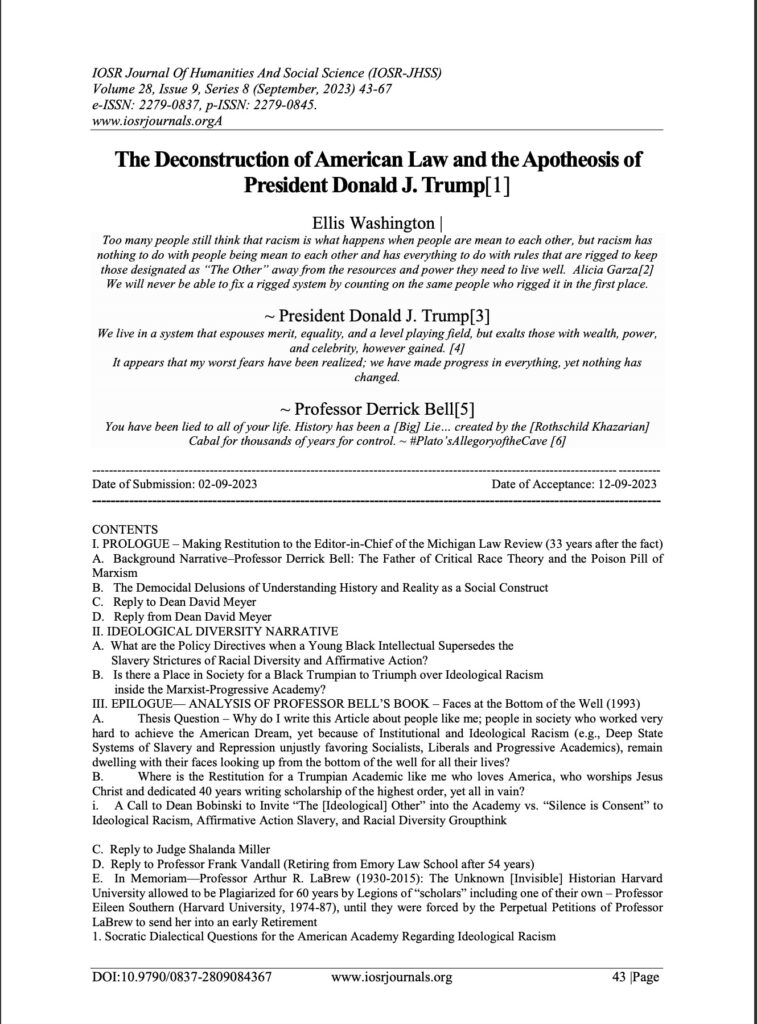
Who is “Goldstein” today? Goldstein is the embodiment of contemporary Cultural Marxism, Progressivism, Liberalism and Socialism that has so utterly poisoned and perverted the public and private schools, the academy, the churches, economics, law, politics, business, medicine, the media, society and culture…Goldstein today is essentially the Democrat Socialist Party and the Satanic New World Order, the legions of Deep State Apparatchiks and One-World Government Functionaries that has plagued the world for hundreds, perhaps thousands of years… A Cult of Evil President Donald J. Trump and his White Hat Military Alliance is working tirelessly to expose, deconstruct and destroy in America and throughout the world… A world, globalist, counter-insurgency movement I collectively call The Apotheosis of President Donald J. Trump, Journal of Humanities and Social Sciences (Oct. 13, 2023)–


*N.B.: 1984. Part 2, Chapter 9. Winston reading from Emmanuel Goldstein’s book The Theory and Practice of Oligarchical Collectivism. A reminder of how the Party controls the past. See also my analysis of the Goldstein character in Orwell’s 1984, Ellis Washington, Cornel West and Clarence Thomas, WND.com (Feb. 23, 2008).
{Google AI gave me some shine here}. . . “The snippets indicate a discussion where Ellis Washington, in his writing, may have used Orwell’s 1984 (featuring Goldstein) and Goldberg’s Liberal Fascism to criticize contemporary American progressive politics.”

*N.B.: According to political analysist, Dr. Steve Turley {beg. @10:15}, “Decontextualization [in regards to race] involves permanent roles played by races that never changes… Therefore Whites are always oppressors. Blacks are always oppressed. Again the key word here is “always”… The economist Thomas Sowell was brilliant in how he pointed out on how the Left always refuses to contextualize their claims so that they can make their accusations in the present.” [e.g., decontextualization]

Further information about Orwell’s Decontextualization ‘Minister of Propaganda’, Emmanuel Goldstein is found below—In George Orwell’s 1984, Emmanuel Goldstein is the purported leader of “The Brotherhood” and author of The Theory and Practice of Oligarchical Collectivism, a book explaining that the Party seeks power solely for its own sake and maintains control through manufactured war, Groupthink, Doublethink, and surveillance. His, or rather the book’s, central message is that only the proles can overthrow the party.


Synopsis II of George Orwell’s Animal Farm (1945)
The most famous line from George Orwell’s Animal Farm is, “All animals are equal, but some animals are more equal than others”. This phrase signifies the ultimate corruption of the revolution’s ideals, highlighting the hypocrisy of the ruling pigs.

Usage Examples & Context:
- Political Satire: Used to describe situations where rules apply differently to elite members, highlighting hypocrisy in organizations.
- Social Commentary: Often cited to discuss unequal treatment, power corruption, and the betrayal of equality principles.
- The Original Context: It is the final, distorted commandment written on the barn wall, replacing the original, egalitarian rules of Animalism.
Hitler, Progressives and the Revolution of Nihilism

Liberal Fascism: The Secret History of the American Left, From Mussolini to the Politics of Change (2007) by Jonah Goldberg argues that modern American Liberalism is fundamentally rooted in fascistic ideology rather than right-wing conservatism. Goldberg claims that fascism is historically a left-wing, collectivist movement centered on state power, which he tracks through American Progressivism—citing figures like Wilson, FDR, and LBJ—rather than just European totalitarianism.
Conservative writer and editor at the National Review, Jonah Goldberg in his celebrated 2007 book, Liberal Fascism, wrote about how “Hitler’s ideological coherence left a great deal to be desired. His opportunism, pragmatism, and megalomania often overpowered any desire on his part to formulate a fixed ideological approach.” This existential, psychotic hatred of ideology I believe freed Hitler from all restraints of logic, rationalism, and morality. “Always before god and the world the stronger has the right to carry through what he wills,” Hitler would declare in a 1923 speech 10 years before becoming the Chancellor of Germany.

Returning to Goldberg’s book he continued, “Hermann Rauschning, an early Nazi who broke with Hitler, encapsulated this point when he famously dubbed Hitler’s move “The Revolution of Nihilism.” According to Rauschning, Hitler was a pure opportunist devoid of loyalty to men or ideas – unless you call hatred of Jews an idea – and willing to break oaths, liquidate people, and say or do anything to achieve and hold power.” This movement is totally without ideals and lacks even the semblance of a program. Its commitment is entirely to action . . . the leaders choose action on a cold, calculating and cunning basis.

“For National Socialists [or the legions of Bureaucrats, Functionaries and Apparatchiks of International Communism in Soviet Russia] there was and is no aim they would not take up or drop at a moment’s notice, their only criterion being the strengthening of the movement.” Rauschning exaggerated the case, but it is perfectly true that Nazis better understood as a maelstrom of prejudices, passions, hatreds, emotions, resentments, biases, hopes, and attitudes that, when combined, most often resembled a religious crusade wearing the mask of a political ideology,” wrote Goldberg…. “Without the loudspeaker,” Hitler once observed, “we would never have conquered Germany.” I would add another technology that was indispensable to Hitler’s Democidal dreams… the Computer. See generally, Ellis Washington, How the U.S. IBM and Hitler Created the World’s First Technocracy–Part I (Sept. 22, 2017), Part II (Sept. 30, 2017).
Synonyms and Similar Core Themes:
· “Four legs good, two legs bad” (Used to simplify ideology for the masses and encourage blind obedience).
· “All animals are equal” (The original, intended philosophy).
· “No animal shall kill any other animal” (The original rule, later altered).
· “I will work harder” (Boxer’s maxim, representing blind loyalty).
· Other notable lines include “Four legs good, two legs bad” and “The only good human is a dead one”.
George Orwell’s Animal Farm is an allegorical novella about farm animals who revolt against their human farmer to create an equal society, only to have the pigs, led by Napoleon, establish a totalitarian dictatorship. It serves as a critique of the Russian Revolution and the corruption of power, famously concluding that “some animals are more equal than others.”

Stone: 1971 was in many respects worse than 1871 (when the Rothschild Khazarian Mafia or Central Bankers began the creation of the Third Central Bank and later the Federal Reserve Bank of 1913 thus making We the People all perpetual Chattel & Debt Slaves). Why? Because the last 50+ years seems to be the New World Order’s last Great Leap Forward (a Mao Chinese Communist Party term), pushing the dystopian democide of Orwell’s Animal Farm from satirical fiction to nightmarish reality. But the Deep State didn’t anticipate what I call The Apotheosis of President Donald J. Trump.🥳😎
C3
@C_3C_3🤔
May 24, 2026
Sitting down?
1970: 8 welfare programs
2026: 80+ welfare programs1970: 1 million illegals
2026: 50+ million illegals1970: 4% foreign born population
2026: 16% foreign born population1970: $371 billion Debt
2026: $39 trillion DebtThe planned demolition of America.
Sick.


Key Plot Summary
- The Rebellion: Inspired by Old Major’s vision of a society without human exploitation, the animals of Manor Farm drive away the cruel Mr. Jones. They rename it “Animal Farm” and establish Seven Commandments based on equality.
- Initial Success and Power Struggle: The pigs, being the most intelligent, take charge. Napoleon and Snowball lead the farm but disagree on all matters, particularly on building a windmill.
- Exile of Snowball: Napoleon drives Snowball away with a pack of ferocious dogs he raised, eliminating competition and establishing himself as a dictator.
- The Reign of Corruption: Napoleon, aided by propagandist Squealer, alters the Seven Commandments to justify the pigs’ luxuries, such as drinking alcohol and sleeping in beds. The animals’ lives become harder, while the pigs gain power.
- Final Betrayal: The loyal horse Boxer, who worked tirelessly, is sold to a glue factory by the pigs for profit. Eventually, the pigs start walking on two legs and behaving like human farmers.
- The Final Commandment: The pigs change the final commandment to “All animals are equal, but some animals are more equal than others.” The pigs become indistinguishable from their former human oppressors.
Key Characters & Symbolism
- Napoleon: Dictator who represents Joseph Stalin.
- Snowball: Leader ousted by Napoleon; represents Leon Trotsky (i.e., Political Theorist).
- Boxer: Dedicated, exploited, working-class horse.
- Squealer: Propagandist who justifies the pigs’ actions (i.e., loosely modelled after Joseph Goebbels, Nazi Minister of Propaganda and Architect of Nazi mass media).
- Old Major: Visionary who represents Karl Marx/Lenin.
In a 2015 essay I wrote on Hitler’s Third Reich although I wasn’t thinking about Orwell’s Animal Farm per se, yet the tyrannical and totalitarian impulses of Liberalism, Progressivism, Socialism and Marxism were in the forefront of my mind when I wrote about how Stalin’s International Communism and Hitler’s National Socialism was so similar to today’s Progressive politics of the Democrat Socialist Party as demonstrated by Hillary Clinton and President Barack Hussein Obama—
When will America, Europe, and the civilized peoples of the world wake up and start looking at the shocking similarities between Nazi National Socialism and Obama Democrat Socialism? As a historian of the Nazi Era, I have been systematically chronicling these tragic comparisons of socialism in a series of detailed historical essays. Once people, particularly young students, begin studying this history with an open mind, they will of necessity realize that both Socialist philosophies are fixed to a set of ideas or Weltanschauung ([Nazi] Worldview) to foment and enslave society in new Nazification, ‘synchronization’ and ‘coordination’ process for American culture and society the Nazis called Gleichshaltung.
 *N.B.: See Generally, Ellis Washington, The Nuremberg Trials: Last Tragedy of the Holocaust (2008).
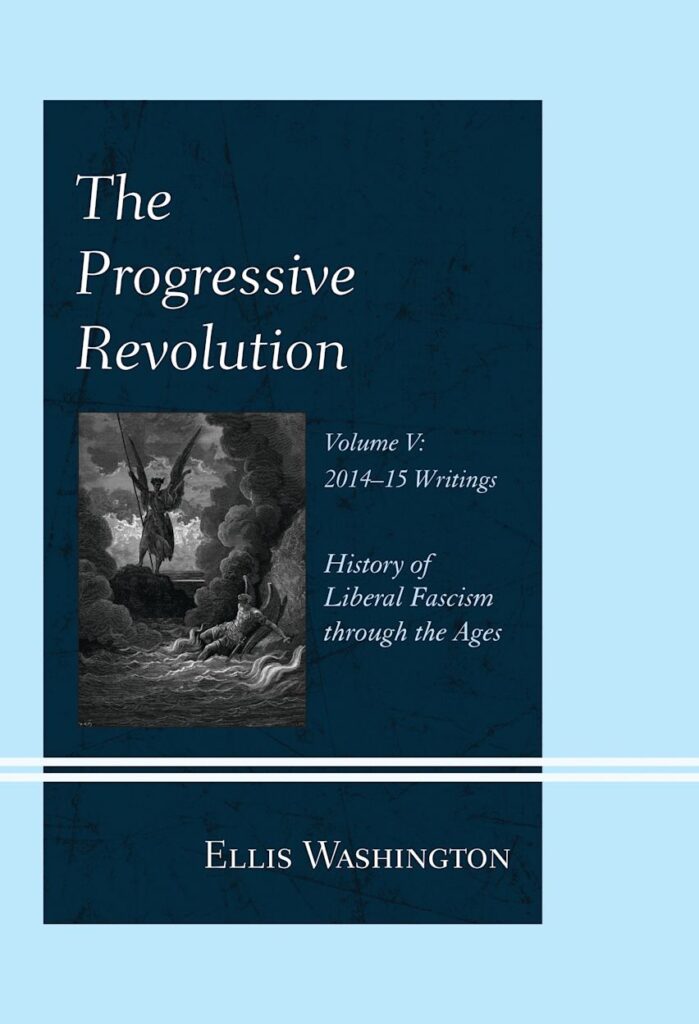
Rather than what they are for, National Socialists and Democrat Socialists can be more accurately defined and studied historically by what or who they are against – deconstructing, perverting, and destroying every vestige of the Judeo-Christian traditions and institutions in America, in Europe, and throughout the world, by any means necessary. Indeed Socialism and Liberalism is “the Revolution of Nihilism” of Hitler and the Nazi Era, or what I call The Progressive Revolution: History of Liberal Fascism through the Ages.

Synopsis III of George Orwell’s Animal Farm (1945)
Animal Farm is a political allegory by George Orwell focuses on themes of corruption, totalitarianism, and the loss of revolutionary ideals. Orwell’s allegory is a stark and existential warning that power corrupts, and revolutions can fail when leaders become totalitarian, replacing one oppressor with another. It highlights how noble ideals can be betrayed, turning an equal society into a dictatorship where “some animals are more equal than others”.
Key Aspects of the Main Message:
· Corruption of Power: The core message is that power inherently corrupts, leading leaders (the pigs) to betray the original revolutionary ideals to maintain control.
· Totalitarianism Critique: The book argues that all tyrannical regimes, regardless of their ideology, ultimately behave the same way—exploiting the working class to serve the elite.
· Betrayal of Equality: The shift from “All animals are equal” to “All animals are equal, but some animals are more equal than others” highlights how language is manipulated to justify inequality.
· The Danger of Ignorance: The failure of the revolution is partly due to the inability of the other animals to question or read the changing rules, emphasizing that an uneducated populace is vulnerable to manipulation.
· Allegory of the Russian Revolution: While written as a warning against Stalinism in the Soviet Union, the story is a broader warning about how revolutionaries can turn into tyrants.
Epilogue I—Stalin’s Communist Soviet Union, Hitler’s Third Reich Nationalism and George Orwell’s Exposure of Progressive Barnyard Bolshevism all Lead to the Creation of the Ubiquitous Foil when Socialism Ultimately fails = The Scapegoat Pretext
Ultimately, Animal Farm is a warning that a “change in rulers” does not mean a “change in system,” and that vigilance is required to prevent new tyrannies. Orwell’s satirical allegories to totalitarian regimes like Stalin, like Hitler, like European, North American and South American Socialists of the Deep State and its current creations – The New World Order or One World Government is evocative of all tyrannical regimes especially during their golden age of the twentieth century—
“Always before god and the world the stronger has the right to carry through what he wills.”
~ Hitler, Speech in Munich (13 April 1923) #NietzscheWilltoPower
“…[I]t is perfectly true that Nazi[ism] better understood as a maelstrom of prejudices, passions, hatreds, emotions, resentments, biases, hopes, and attitudes that, when combined, most often resembled a religious crusade wearing the mask of a political ideology.”
~ Jonah Goldberg, Liberal Fascism, p. 55
In conclusion, parallels between Orwell’s satirical allegorical thesis in Animal Farm and to a greater degree in what I consider his sequel to Animal Farm, “1984” (1948) is set against the backdrop of Hitler’s Third Reich and World War II is stated in my 2015 book review of Dr. Daniel Jonah Goldhagen’s classic text on Hitler and the Third Reich, Ellis Washington, Hitler’s Willing Executioners. . . Then and Now, analyzing the work of Harvard Professor of History, Dr. Stanley Hoffman and his review of Goldhagen’s work

Professor Stanley Hoffmann History Professor at Harvard University got to the crux of Goldhagen’s central arguments: “[Goldhagen’s arguments demonstrate] a profound understanding of modern German history, and a fiery blend of moral passion and rigorous analysis lead to a starkly original demonstration of the pervasiveness of antisemitism in German society before and under Hitler, of the way in which strong prejudices can push ordinary citizens into undertaking gruesome policies of extermination, and of the importance of political culture in shaping a society’s behavior.” This revelatory quote by Professor Hoffmann is saying many things about Goldhagen’s work: First, he doesn’t merely copy the same historical ‘guilt-innocent’, simplistic binary dichotomy the majority of Holocaust scholarship for the past 80 years have fallen into the trap of, but Goldhagen historical analysis is fresh, strong and probing into the Groupthink and Doublethink psychological depths behind how easy and inevitable it was for the Nazis to inspire mass genocide from the German people – the most educated and cosmopolitan society in history.
Die Juden sind unser Unglück!
“These views of Jews – summarized by the most frequently intoned antisemitic phrase during the Nazi period, “The Jews are our misfortune” – were the common sense of the society,” Goldhagen wrote in a Symposium speech in 1996. “It was mother’s milk. Melita Maschmann, a former member of the girls’ division of the Hitler youth, conveyed this in a post-war confessional memoir.” She wrote, “Those Jews were and remained something mysteriously menacing and anonymous. They were not the sum of all Jewish individuals…they were an evil power, something with the attributes of a spook. One could not see it, but it was there, an active force for evil.

*N.B.: A Nazi rally in Munich in 1933. The phrase, “Die Juden sind unser Unglück!” (“The Jews are our misfortune!”) was coined by Heinrich von Treitschke in 1879 in the Preussische Jahrbücher (during the reign of Otto von Bismarck [ruled 1871-90]). The same slogan also appeared at the bottom of the front page of each issue of the Nazi weekly newspaper, Der Stürmer, by the vile editor and Nazi Propagandist Julius Streicher. See generally, my comprehensive essay on the Nazi Propagandist, Julius Streicher, Ellis Washington, Nazi propaganda… then and now (Sept. 14, 2015).
The central idea stated from this excerpt of my 2015 essay is the absolute necessity of any tyrannical dictatorship weather its Stalin’s Soviet Union (the Jews and Capitalism), Hitler’s Third Reich (the Jews) or Orwell’s satirical allegory in Animal Farm (mankind, humanity), the result are the same—A scapegoat must be created and seared into the minds of the people no matter how unlikely or anti-historical it is. But why? Totalitarian dictators may be sociopaths and psychopaths or even suffer from Narcissistic and Antisocial Personality Disorder. (See, the works by Dr. Sam Vaknin, Malignant Self Love (1997, 2015). But why is the creation of a ubiquitous Scapegoat necessary to maintain a tyrannical dictatorship over the people?
Epilogue II—The Scapegoat Pretext: Why Ayn Rand’s Narcissism, Egoism and Militant Atheism Ultimately Caused an Irredeemable Deconstruction and Collapse in the Works of Philosopher Ayn Rand’s Objectivism Worldview

According to selected readings of the Ayn Rand Institute that promote the “Objectivism” philosophy of Philosopher Ayn Rand “The creation of a ubiquitous scapegoat is a foundational tactic for maintaining a tyrannical dictatorship, functioning as a “them vs. us” mechanism that shifts blame for systemic problems away from the regime and onto a fabricated enemy. This tactic is necessary for dictators to control the population through fear, foster in-group loyalty, and justify the erosion of democratic rights in the name of security.
*
Here is why a ubiquitous scapegoat is necessary for sustaining a tyrannical regime:
- Deflection of Accountability: Dictatorships often suffer from economic, social, or political dysfunction. Scapegoating allows leaders to redirect public anger over these failings toward a specific group—often minorities, dissidents, or foreign powers—rather than the ruling clique.
- Justification for Repression: By framing the “scapegoat” as a mortal threat to the nation (e.g., as “vermin” or “enemies of the state”), regimes justify extreme authoritarian measures, such as mass imprisonment, surveillance, and the removal of civil liberties to “protect” the majority.
- Fostering In-Group Solidarity: Defining a clear “enemy” forces the population to unite with the dictator to protect their shared identity, fostering loyalty through an “identification with the aggressor” mechanism.
- Normalization of Violence and Fear: By creating an environment where an “out-group” is blamed for all misfortunes, the regime normalizes hatred and obedience, making citizens passive or complicit in the persecution of the targeted group.
- Simplifying Complex Issues: Scapegoating simplifies the chaos of a deteriorating society into a black-and-white narrative, encouraging “neurological laziness” among the population, who then accept the dictator’s promises of easy solutions.
Historical examples, such as Nazi Germany’s focus on Jewish people and Soviet Russia’s targeting of the bourgeoisie, illustrate that the scapegoat does not need to be a real threat, but rather a “convenient” target that can be easily blamed for the regime’s mismanagement.
In conclusion, like all tyrannies and utopias of Mankind throughout history either they try to ignore (or denigrate) religion, or they place their own perverted philosophy as a substitute for God. Although I find some good things in the writings of Ayn Rand, particularly her strong stance in favor of laissez-faire Capitalism, because her Objectivism ideas are rooted in Atheism and Egoism rather than Biblical Theism in my opinion Rand goes too far with her militant atheism and ends up fetishizing Capitalism and those who she perceives are enemies of Capitalism (e.g., Immanuel Kant, Ronald Reagan) simply for their uncompromising adherence to rationalism (Kant) or willingness to form new political alliances with the so-called “Religious Right” (Ronald Reagan). Either way Ayn Rand’s militant, egoistic Atheism will lead you astray from the Reality of Truth just like what is portrayed Orwell’s political allegory, Animal Farm, but instead of coming from the ‘Right’ Orwell is coming from the extreme ‘Left’ political worldview.
Here is a AI Overview on the question of why Ayn Rand’s Atheism will always lead to a moral collapse of her mainstream Objectivist ideas:
Ayn Rand’s atheism is foundational to Objectivism, as she viewed it as necessary for a reality-based, rational philosophy, but critics argue this atheism makes the philosophy fail by removing a traditional foundation for moral absolutes (e.g., Christianity, Biblical morality). It requires humans to be the ultimate source of value, creating a “fatal flaw” through egoism and radical individualism.
· Removal of Objective Morality: By rejecting a supernatural or transcendent moral authority, Objectivism places the burden of morality on individual, self-interested judgment. Critics argue this allows morality to be arbitrary or entirely utilitarian, rather than based on inherent worth.
· The Problem of “The Heroic Man”: Rand’s atheism necessitates viewing humans as “heroic beings” holding their own happiness as the highest purpose. Critics suggest this creates a utopian view that ignores human limitations and the social nature of humanity, making the philosophy unrealistic.
· Atheism as Anti-Mysticism: Rand considered atheism not just a disbelief in God, but a requirement for adopting “reason” as the only absolute, rejecting faith as “the worst curse of mankind.” Opponents find this rigid rejection of all spiritual or supernatural thought to be narrow and unconvincing.
· Egoism vs. Social Reality: The combination of atheism and rational egoism (rational self-interest) is often viewed as ignoring the need for cooperation, community, and altruism, which many argue are crucial to human survival and societal well-being.
· Perceived “Tautology” and Circular Reasoning: Some critics feel Objectivism acts like a secular religion, where any failure in the system is blamed on an individual’s inability to be “rational” enough, making the philosophy impossible to falsify or properly argue against, as Rand dismissed dissenting opinions as irrational.
The Apostle Paul in the New Testament critiques man-made philosophies—particularly in Colossians 2:8—as “empty deceit” that takes believers captive through human traditions and elemental spirits rather than Christ. He argues that these philosophies are fundamentally flawed because they are not based on the gospel, prioritize human reasoning over divine revelation, and fail to recognize the supreme wisdom of the cross.


Category: Commentary