2026 Summer Reading List—10 Books that Secretly Built History’s Greatest Minds (and Can Build Yours)


Prologue I — Selected Readings & Notes on the Ancient Greek, Roman & Literary Classics by Professor Ellis Washington, J.D.
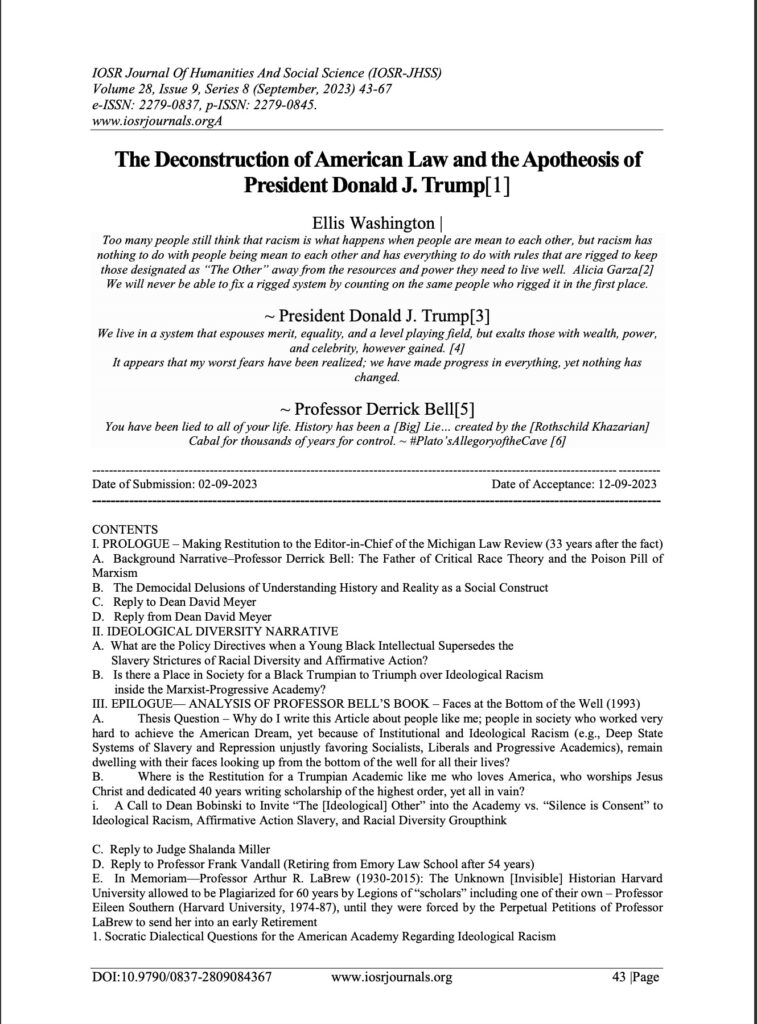
Ellis Washington, 1918-2018—100 Years of UnNatural Law Jurisprudence of Justice Oliver Wendell Holmes, 9 Faulkner Law Review 1 (2017), pp. 171-226; Ellis Washington, The Deconstruction of American Law and the Apotheosis of President Donald J. Trump, IOSR Journal of Humanities and Social Sciences, Vol. 28, Issue 9, Series 8 (Sept. 2023 [publ. Oct. 23, 2023])—


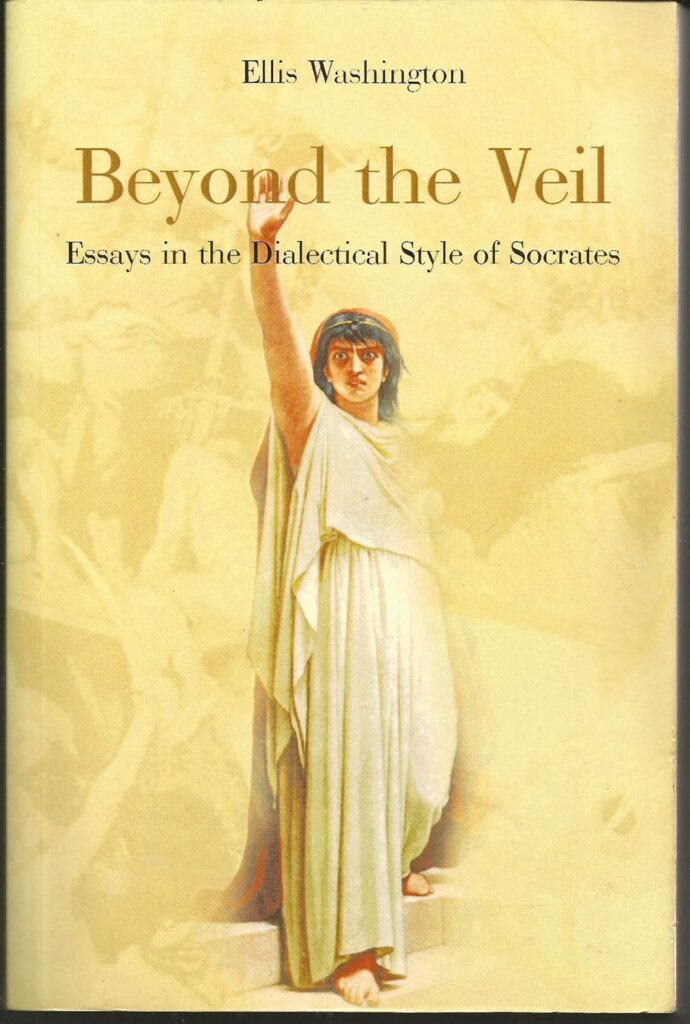
Ellis Washington, Symposium—An Analysis of Dante’s Inferno and Lessons Learned at Lillibridge Elementary School (Detroit, MI)) (Sept. 22, 2024); Ellis Washington, An American Judicial Judas: 1994-2024—30th Anniversary of Exposing Chief Judge Richard A. Posner’s Legacy = Betrayed President Reagan, Betrayed the Judiciary, Betrayed America—Part III (Dec. 31, 2024); Essay No. 4—[12] Confessions to 9 Strangers and a Preacher in Ellis Washington, Beyond the Veil: Essays in the Dialectical Style of Socrates (2000 [pp. 15-19], 2004).
*
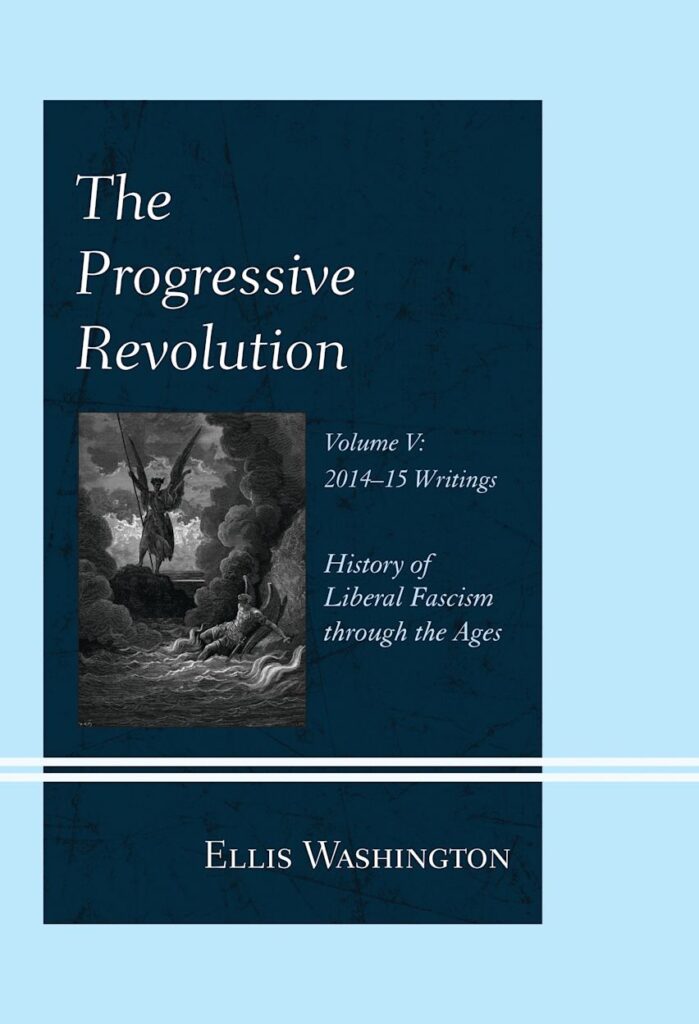
Ellis Washington, On Machiavelli and ‘the Ends Justify the Means’ to Liberal Fascism, RenewAmerica.com (Sept. 28, 2014). This essay on Machiavelli’s The Prince (1513, 1532) is based in part on ideas from Great Books of the Western World, Robert Maynard Hutchins, Editor-in-Chief (University of Chicago, 1952), Vol. 2, Chap. 3 – Aristocracy; Vol. 3, Chap. 51 – Man, Chap. 98 – War and Peace; Vol. 23 – Machiavelli and Hobbes. A later, more expansive version of my essay on Machiavelli is published in my book in Ellis Washington, The Progressive Revolution—2014-15 Writings, Vol. V—History of Liberal Fascism through the Ages (2017), pp. 76-79.
*
Selected Readings & Notes on Shakespeare—Ellis Washington, On Shakespeare: Richard III and Julius Caesar, RenewAmerica.com (October 25, 2014); Stone Washington, What Shakespeare’s Henry IV, Part 1 Teaches America about Obama II, Part 2 , RenewAmerica.com (July 27, 2014); Ellis Washington, Freshman Falstaff vs. Professor Darwin Dawkins, RenewAmerica.com (June 10, 2015); *N.B.: This essay is based in part on ideas from Encyclopedia Britannica Great Books of the Western World, Robert Maynard Hutchins, Editor-in-Chief (University of Chicago, 1952), Vol. 3, Chap. 90 – State; Chap. 97 – War and Peace; Vols. 26-27 – Shakespeare Vols. I & II. Cliff Notes Plot Summary, Shakespeare’s Julius Caesar. Ellis Washington, On Courage (Analysis of Dr. Mortimer Adler’s Syntopicon, Vols. I & II, Great Books of the Western World [1st Ed., 1952]), RenewAmerica.com (June 10, 2015). *N.B.: This article is based in part on an excerpt from Great Books of the Western World, Vol. 2: The Great Ideas – A Syntopicon, Vol. 1, Chap. 13: Courage, Syntopicon, Vol. 2, Shakespeare, pp. xxi-xxii, Man, chap. 51 (p. 1), Monarchy, chap. 59 (p. 204), Oligarchy, chap. 62 (p. 270), Tyranny, chap. 95 (p. 939), Virtue and Vice, chap. 97 (p. 975), War and Peace, chap. 98 (p. 1010), Mortimer J. Adler, Editor-in-Chief (University of Chicago, 1952).
*
Homework for Students—
- Transcribe podcaster text (beg. @35:25), critically study, and write your own notes regarding the thesis statement in this video regarding how today’s youth for several generations have been enslaved in Socialism and Communism, Liberalism and Progressivism without realizing it. (*N.B.: See Ayn Rand meme below regarding the differences between Communism vs. Socialism).
- Listen to and critically study video of the miraculous technical advances and architecture of Tartarian civilization which was hidden from humanity beginning in the 1870s and WHY?!?
- Video – In 1913 the Carnegies Brought Every Library in America – then Replaced the Old Books, by The Reversed Century.
- Questions for Student Thought? – Why is the Deep State putting air tags in millions of books, scanning them and destroying them en masse?
- Question? – Is the Deep State and the Globalist Conspiracy preparing the world for another ubiquitous “Great Reset”? Why did they do this? To what end was the Deep State pushing U.S. towards – Apocalypse or New Age? Or is the coming New Age our Final Apocalypse?
*N.B.: See generally, selected YouTube.com video links regarding how ALL school textbooks and curriculums for over 150 years are purposely being created and designed to obfuscate (hide), miseducate, deconstruct, pervert, and destroy History, Reality, Truth, God, Jesus Christ, Christianity, Real Problem solving, and Critical Thinking in the minds of young children and college students.

HOW?!? By following the Deep State dictates from our own traitorous U.S. Government that for decades have pushed Voluntary Slavery or “Progressive Education” through FBI, CIA and NSA programs like Nazi “Operation Paperclip” and “Operation Mockingbird” using tactics and strategies like — ‘Synchronization,’ ‘Consolidation’ and ‘Forcing into line’ (e.g., Gleichschaltung) while over time systematically indoctrinating students into an existential Nazi (e.g., “National Socialism”) and Cultural Marxist
Weltanschauung (Worldview, Philosophy). E.g., #Operation Paperclip, #OperationMockingBird, #MKUltra, #MindControl. See also, This is the True History of the World, by Archivist.


*N.B.: See generally, Consolidation of Nazi Power–Gleichschaltung of fronts and party organization (SlideShare).

*N.B.: According to Yad Vashem the Nazis adopted and perverted Immanuel Kant’s original, apolitical conception of Weltanschauung for their own evil purposes as a tactical and strategic pretext to foment the growth and development of the Third Reich to dominate and control every aspect of German society and in the future over every country and nations that Hitler and the Nazis would dominate and control. That same philosophy is being practiced here in modern times, in 2026 America under the Democrat Socialists of America [DSA], Liberalism, Wokism, and Cultural Marxism—

“The Nazis adapted Weltanschauung (worldview) from a philosophical concept into a rigid, totalizing racial doctrine. They used it to claim absolute scientific truth for biological determinism, transforming politics into an apocalyptic struggle for the survival and dominance of the “Aryan” race.” #Democratic Socialists of America—DSA
PROJECTS NEVER MEANT TO BE FOUND! CLASSIFIED DOSSIER: BLUEBIRD ➤ ARTICHOKE ➤ MKULTRA ➤ MOCKINGBIRD ➤ PAPERCLIP ➤ MIDNIGHT CLIMAX
by Medeere Greere, Dec. 7, 2025
*
DECLASSIFIED State Sanctioned Madness. Psychological Warfare. Lies Carved in Stone. Six covert CIA programs exposed: mind control, media corruption, Nazi science, sex-driven blackmail and Project Artichoke research or government sanctioned DEMOCIDE whereby poisons are systematically hidden in food, water, Coca Cola, beer, cigarettes, and inside all baby and children’s vaccines since 1945 or since the end of World War II. These weren’t experiments — they were weapons. The truth was never meant to be found. But now, it’s out.

|
About the Author—Professor Ellis Washington, J.D.—I went to Harvard Law School for 1 year (1988-89) with future POTUS Barack Hussein Obama, (b. 08/04/1961 – d. 09/29/2019), who was a secret descendant of the Rothschild Banking Cartel Family and a blood grandson of the German NAZI dictator, Adolf HITLER! – who was also a Rothschild – but I took the opposite path in Life—New World Order, Communism, Treason, Pedophilia and Satanic Ritual Abuse vs. Christianity, Conservatism, Protecting the Children & America First Nationalism. I repeatedly refused to take the “Satan OATH” which is why I’ve been blacklisted since 1989 – for over 37 years—for my entire legal and academic career, yet I Fight on! Why? To avenge Harvard University’s original 1692 motto—Veritas pro Christo et Ecclesia {= Truth for Christ and the Church}.
Cui bono?– Who benefits? Why are all national currencies of the world promiscuously printed at will by the Rothschild Central Bankers? Is it to fund perpetual False Flag Wars like—America- Israel vs. Iran, America vs. New World Order, America vs. Venezuela, Israel vs. Gaza, Syria, Iran, Yemen & Lebanon, Russia vs. Ukraine, Taiwan vs. China, Rwanda vs. The Congo, Cambodia vs. Thailand, Armenia vs. Azerbaijan, Civil war in France, in Yemen, in Laos, in Indonesia, and existential battles all over the world, while keeping the entire world enslaved inside an existential – Birth-School-Labor-Taxes-Debts-Retirement-Death cycle of the Rothschild Khazarian Mafia Matrix (1871-2021 [26])? Further answers can be learned by reading, studying and sharing the Truth of my Critical Thinking blog that on 1 March 2026) surpassed 27 million views! See, EllisWashingtonReport.com, Facebook, Twitter/X—#JesusIsGod (Isaiah 9:6) #DCActof1871 |

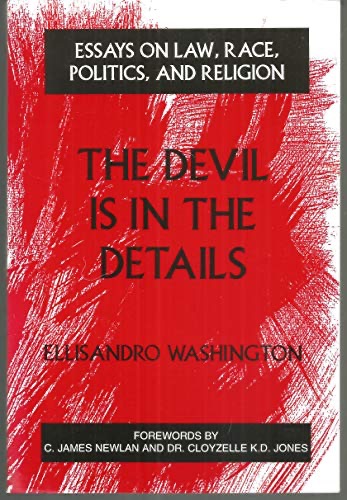
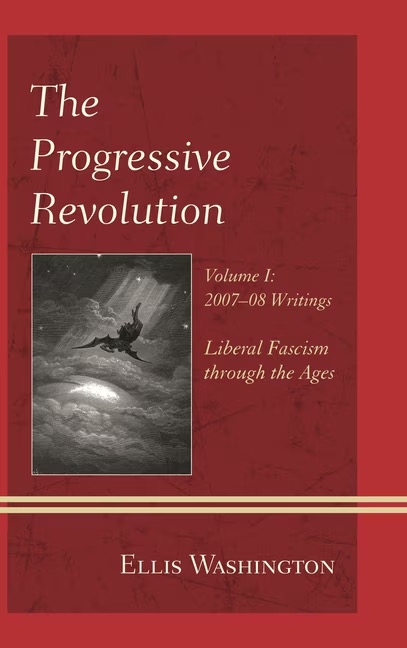
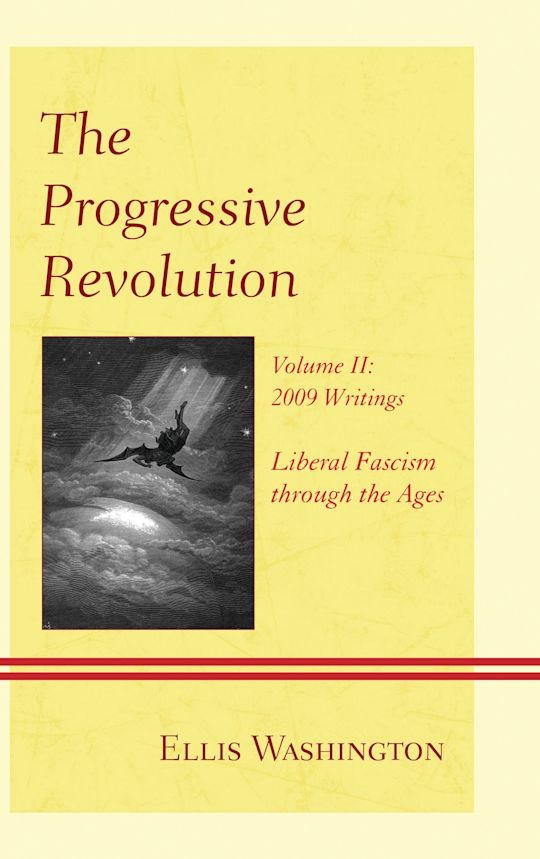
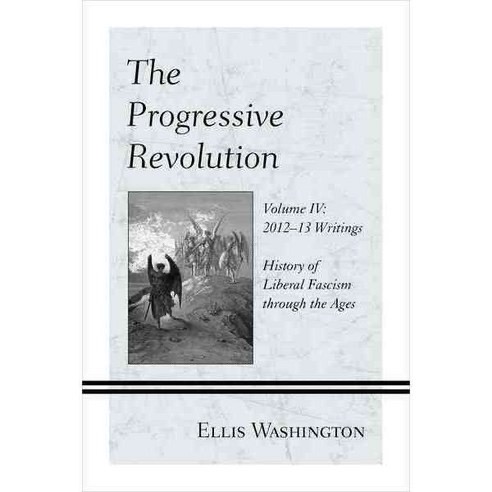
Books by Professor Ellis Washington, J.D.


The only thing you absolutely have to know is the location of the library.”
– Albert Einstein
“The Library is the temple of learning, and learning has liberated more people than all the wars in history.”
– Carl Rowan
“Those that don’t got it, can’t show it. Those that got it, can’t hide it.
“If you’re silent about your pain, they’ll kill you and say you enjoyed it.”
– Zora Neale Hurston (1891-1960)
[Morpheus to Neo:] “Everything they told you was a [Big] Lie.”
– The Matrix Movie, Part I (1999)—Construct Scene
“There are always more slaves than masters.”
Prologue II—Complete Transcript of Stephen Petro’s YouTube Video—10 Books that Secretly Built History’s Greatest Minds (and How They Will Build Yours) with 5 Additional Books, Suggested Readings, and Notes by Professor Ellis Washington, J.D.
{Stephen Petro Transcript} The greatest minds in history didn’t become who they were simply because of their natural genius. They became who they were because of how they trained their minds. Over my more than 13 years as a peer-reviewed scholar and educator, I’ve come to appreciate that many of these figures, in fact, were reading many of the exact same books. And in this video, I’m going to show you 10 of them. Who read them, why, and what specific capacity each one builds for your mind.
Starting with the first book on this list, Plutarch’s [Parallel] Lives, written around 100 AD. This is a book that arguably built more great leaders than any military academy in history. Napoleon called it “his manual of military and civil rule.” George Washington modeled himself so deliberately on Plutarch’s heroes that his contemporaries noticed. Shakespeare used it as the direct source for Julius Caesar, Antony and Cleopatra, and Coriolanus. And in some passages, even lifting Plutarch’s prose almost word for word. U.S. presidents Hamilton [sic] and Jefferson both drew on it heavily in the Federalist Papers. And Charlotte Corday who assassinated the revolutionary leader Jean-Paul Marat (1743-93) during the French Revolution, spent the entire day before she did it reading Plutarch.
And regardless of the actual moral character we might judge of any of these individuals, the point here is how Plutarch’s work affected their strategic and intellectual growth. You see, Plutarch doesn’t teach through principles. Instead, he teaches through lived examples. Through the stories of how extraordinary people actually behaved under pressure, made decisions, and faced failure. And so, what it trains in you is a certain kind of character modeling. Namely, the ability to construct a vivid internal image of what a certain kind of excellence looks like, and to measure yourself against it.
Yet, the second book on this list teaches you through proof rather than biography. Euclid’s Elements, a geometry textbook written around 300 BC, shaped some of the greatest non-mathematical minds in history. And the story of how is one of the most surprising intellectual stories I know. Abraham Lincoln carried a copy of it in his saddlebag and studied it by lamplight at night. But the thing is, he wasn’t trying to learn geometry, yet he later explained why he nonetheless carried it around with him. As he stated— “You can never make a lawyer if you do not understand what ‘demonstrate’ means.”
Einstein called his childhood copy of this book “the holy, little geometry book” and named it alongside a magnetic compass as the two gifts that most shaped his mind. Newton, Hobbes, Spinoza, Copernicus, Galileo, all of them read this book and all of them emphasized how it changed how they thought. And so, what the Elements actually transmits is the understanding that a claim is not knowledge until it has been demonstrated step- by- step from [Aristotle’s] First Principles. Most people never learn this distinction. But Lincoln did, and it showed up in every argument he ever made.
Which brings us to a somewhat related book, at least in spirit, is the third book on this list, Lucretius’ De Rerum Natura, or in English, “On the Nature of Things.” Written around 60 BC, which was actually almost destroyed during the Middle Ages. In fact, it survived through a fragile manuscript tradition and nearly disappeared from active intellectual circulation in medieval Europe. In 1417, an Italian humanist named Poggio Bracciolini found it in a monastery library and brought it back into circulation. And how this subsequently somehow affected some of the world’s greatest minds is extraordinary.
Thomas Jefferson owned 5 Latin editions of this book and described himself in letters as an Epicurean. Montaigne’s heavily annotated personal copy still exists at Cambridge University Library. In fact, he quoted it 149 times in his Essais [1588](Essays). Machiavelli actually hand-copied the entire manuscript for himself, and Newton, Galileo, and Darwin all read it. Stephen Greenblatt, in his Pulitzer Prize-winning book, The Swerve, argues that the rediscovery of this single poem helped ignite the scientific revolution and planted the seeds of the American founding. And what it trains is a kind of scientific thinking. The ability to explain the world through natural causes with evidence and method.
Okay, so now the fourth book on this list is one I encountered way back during my undergrad philosophy courses, and I really think it’s one of the most underrated books in philosophy. And that book is Boethius’s Consolation of Philosophy, which was written in 524 AD, while the author waited in prison for his execution. Boethius was one of the most powerful men in Rome, a philosopher, statesman, and scholar who was falsely accused of treason and condemned to death by torture. And yet the book he wrote in that cell contains no bitterness, no despair, no rage. Instead, it is a philosophical dialogue about what fortune can and cannot take from you. And what remains when everything external has been stripped away.
Alfred the Great actually translated it into Old English. Dante cited it extensively in his Divine Comedy. Chaucer translated it into Middle English. Thomas More read it while himself imprisoned in the Tower of London awaiting execution. Queen Elizabeth I also translated it herself, and Thomas Aquinas wrote extensive commentary on it. In fact, for a thousand years, it was the most widely read book in Europe after the Bible. And I think one of the reasons for this is because of what it trains you in mentally, namely equanimity under radical adversity. The ability to understand that what fortune gives, fortune can take away. And perhaps most importantly, to locate your identity in something fortune cannot reach.
But the fifth book on this list may have the broadest documented influence of any book secular book in Western literary history. Montaigne’s Essays, published in 1580, were read by Shakespeare. Nietzsche said Shakespeare was Montaigne’s best reader, which is a quintessentially brilliant Nietzschean observation. Descartes inherited something from the intellectual world Montaigne helped create – the willingness to doubt inherited authorities and rebuild understanding from the ground up.
Pascal argued violently against him, which means he read him obsessively. Nietzsche, Emerson, Rousseau, Virginia Wolf, Darwin, Freud, and Marx, all of these thinkers cited Montaigne’s Essays as a direct influence. And I think what makes this particularly interesting is that Montaigne’s subject was himself. His internal contradictions, his changing opinions, his uncertainties, and so on. In other words, he was trying to understand what it actually felt like to be a thinking human in an uncertain world, rather than building a system or constructing some grand argument.
And so, what I think we can say that this book trains is a sort of intellectual honesty, the discipline of examining your own internal contradictions, rather than hiding them, and following your thinking wherever it actually leads, rather than where you want it to go.
Yet, it’s the sixth book on this list that is the least well-known relative to the scale of its influence. Xenophon’s Cyropaedia, The Education of Cyrus, written around 370 BC, can be thought of as a sort of leadership manual. Alexander the Great read it before his campaigns. Scipio Africanus carried a personal copy. Caesar and Cicero both drew on it. Machiavelli knew Xenophon well, and The Prince can be read in part as a Renaissance response to Xenophon’s model of leadership.
Jefferson actually owned two copies. Franklin read it. And Peter Drucker, widely considered the father of modern management, said that despite reading every leadership book published in his lifetime, Xenophon remained the best. And what it trains you on is the understanding that leadership is fundamentally a problem of character rather than technique. And also, that how a leader treats people when it costs something is the only reliable measure of who that leader actually is.
Yet, it’s the seventh book on this list that presents you with the most extreme real-world test of any book here, namely Epictetus Enchiridion. Marcus Aurelius, who as emperor had access to virtually every Western philosopher alive, credited it as the foundation of this thinking and thanked his teacher specifically for lending him his personal copy. Frederick the Great never went on a military campaign without one. Theodore Roosevelt brought it to the Amazon. Montaigne had a line from it carved into the wooden beam above his study. And then there is Admiral James Stockdale, who was shot down over Vietnam in 1965 and held as a prisoner of war for 7 ½ years, subjected to systematic torture. Stockdale later wrote that he survived because he had memorized Epictetus before deploying and recited the arguments to himself in his cell.
And so, what the Enchiridion trains you on is the dichotomy of control, the ability to distinguish in any situation what is genuinely within your power from what is not, and to stop wasting your energy on the latter.
The eighth book on this list is one that most Western readers have never seriously engaged with, which is unfortunate. You see, The Analects of Confucius, compiled by Confucius’s students around the 5th century BC, shaped the entire intellectual foundation of East Asia for two millennia. But what is less well-known is what it did to Western minds when it arrived in Europe. The prominent thinker Voltaire was so taken with Confucius that a portrait of him hung on the wall of his library, and he called him the greatest sage who ever lived, using Confucian rationalism deliberately as a weapon against Christian dogma and European religious intolerance.
Leibniz also drew from Confucian philosophy in developing his own metaphysics, seeing in its evidence of a universal rational morality that transcended culture. Ralph Waldo Emerson read the Confucian classics extensively and cited them throughout his essays. And the 1687 translation of The Analects became, in the words of the historians of the Enlightenment, one the primary intellectual resources for an entire generation of European thinkers trying to imagine a moral order that didn’t depend on revealed religion. And so, what The Analects trains is something simple, yet extraordinarily rare. The understanding of how you govern yourself determines how you relate to others, which determines how institutions forms, which in turn determines how civilizations hold together.
The ninth book on this list is the one that Thomas Hobbes, who had read virtually everything, chose to translate at the age of 40, stating that it was the most instructive work he had ever encountered, namely Thucydides’ History of the Peloponnesian War, written around 400 BC. A history of a war between Greek city-states. This is a book that I was assigned readings from in my undergrad history of ancient Greece class. Alexander the Great kept this book with him while on campaigns. Frederick the Great studied it carefully. John Adams called it essential reading for any serious statesman. And what Thucydides trains is political realism, the ability to see power as it actually operates rather than as it is officially justified.
He was the first Western historian to strip away mythology and moral decoration from political events and simply described what was happening. Who wanted what, who had what, and what they were willing to do to get it. And the fact that it was written 2,400 years ago and still reads like an account of last week kind of says a lot.
But finally, the 10th book on this list might be the most surprising. The Arabian Nights (aka One Thousand and One Nights) compiled across centuries between roughly the 9th and 14th centuries. The poet Goethe read it repeatedly and said it permanently changed how he thought about narrative. Charles Dickens cited it as one of the most formative reading experiences of his life. Marcel Proust drew on its structure. Jorge Luis Borges said it shaped his entire understanding of how stories work. Franz Kafka, J.R.R. Tolkien, Alfred Lord Tennyson, Samuel Taylor-Coleridge, and Marie-Henri Beyle, better known by his pen name Stendhal, all read it deeply.
And so, what the Arabian Nights trains you on is narrative imagination, the ability to think in different frames, different structures, and also stories in general rather than in isolated facts. And this insight is embodied in Scheherazade, the fictional narrator at the heart of the collection, a young woman who survives a murderous king by telling him a captivating story each night and stopping at a cliffhanger before dawn, keeping herself alive through the sheer power of narrative. She survives not through strength or strategy, but through her ability to construct an endless self-generating story and keep the listener inside it. And often, its narrative, not simply analysis alone, that truly makes us alive.
Selected Summer Reading List of my Essays & Poems for Children (Ages 8-High School), College Students, Adults & Seniors:
1. Ellis Washington, An Essay & Poem on Chief Judge Richard A. Posner—Part III (Dec. 31, 2024). (Has an interesting poem and analysis on the children’s classic – “The King Has No Clothes.”)
2. Ellis Washington, An Essay & Poem on Chief Judge Richard A. Posner—Part VII (Feb. 23, 2025)
(This opus has an extended analysis of Edgar Allen Poe’s Classic Poem, The Raven [1844]).
(Search “Archives” Section to read all of the pieces from my 8-Part Essay Series on Chief Judge Richard A. Posner, 7th Circuit Court of Appeals [retired Sept. 2017]. Professor Richard A. Posner has the distinction of being the most cited legal scholar by the Supreme Court and the most cited scholar in law journals and law reviews in history!);
3. Ellis Washington, Movie Review of George Orwell’s Animal Farm (2026)—In Memoriam Dr. Karl Glenn (1936-2026)(May 10, 2026);
4. Ellis Washington, Symposium—An Analysis of Dante’s Divine Comedy (Inferno)—2024 (Sept. 22, 2024);
5. Ellis Washington, I Remember Dr. Morris Dunbar – Professor of Biology on MLK Day (Jan. 26, 2023)[Rev. May 2026];
6. Ellis Washington, “One Son Died in Infancy, 2 Sons Resurrected in Mystery”–I Remember Chiarina Green (my High School Friend) (Oct. 25, 2021 [Rev. Aug. 2026]);
7. Ellis Washington, I Remember [Professor] Rodney Whitaker (on John Coltrane’s 95th Birthday) (Sept. 23, 2021);
8. Ellis Washington, Happy ‘Liberation Day’!—How President Trump Revived Mercantilism and Tariffs to Defeat the Deep State and to Reestablish U.S. as #1 (April 15, 2025);
9. Ellis Washington, 8 Open Letters—Reply to President David Meyer on the Apotheosis of President Donald J. Trump (Dec. 3, 2023).
10. Article ARCHIVE of my Son and Managing Editor, Stone A. Washington, called—SOCRATES CORNER.
“The truth is often not that very complicated. What gets complex is evading the truth.”
— Dr. Thomas Sowell
“A house made with memory is stronger than a house made with walls.”
— Anonymous Sicilian Proverb“
2026 Summer Reading List of 10 Books that Secretly Built History’s Greatest Minds (and how they will build yours) by Stephen Petro with 5 Additional Books and Suggested Readings & Notes by Professor Ellis Washington, J.D.
1. Plutarch’s [Parallel] Lives (Early 2nd century AD)

Parallel Lives (commonly known as Plutarch’s Lives) is a foundational collection of 48 biographies of famous Greek and Roman men written by the ancient philosopher and historian Plutarch at the beginning of the second century. [1]
Core Structure and Purpose
· Paired Biographies: The work features 23 pairs of biographies alongside four standalone profiles.
· Moral Focus: Each pair matches one Greek and one Roman figure (e.g., Alexander the Great and Julius Caesar).
· Character Study: Plutarch prioritized character and virtue over absolute historical precision, using personal anecdotes to explore moral choices. [1, 2, 3, 4]
Famous Subjects Featured
· Greek Leaders: Alexander the Great, Pericles, Solon, and Demosthenes.
· Roman Leaders: Julius Caesar, Mark Antony, Cicero, and Pompey.
· Mythological Founders: Theseus (Athens) and Romulus (Rome). [1, 2, 3]
Reading and Access Options
The text is widely available across major modern platforms:
· Free Editions: You can download public domain versions on the Internet Archive or grab free copies for Kindle.
· Retail & Audio: Budget e-books are hosted on the Google Play Books Store and Kobo, while audiobook narrations can be streamed via Audible. [1]
Are you looking for a summary of a specific person’s biography, or would you like to know how Plutarch’s work influenced Shakespeare’s plays?
Suggested Writings and Notes On Plutarch by Professor Ellis Washington, J.D. –
Ellis Washington, On Plutarch and the Idea of Citizen, RenewAmerica. com (June 28, 2014). *N.B.: This essay is based in part on ideas from Great Books of the Western World, Robert Maynard Hutchins, Editor-in-Chief (University of Chicago, 1952), Vol. 2, Chap. 7 – Citizen and Vol. 14 – Plutarch. See also, Ellis Washington, The Progressive Revolution—Vol. 5: 2014-15 Writings—History of Liberal Fascism through the Ages (Hamilton Books, 2017), pp. 340-43.
*
Since Shakespeare was greatly influenced by Plutarch I have included my notes on Shakespeare in my analysis of Plutarch. See, Great Books of the Western World, Vol. 2: The Great Ideas – A Syntopicon, Vol. 1, Chap. 13: Courage, Syntopicon, Vol. 2, Shakespeare, pp. xxi-xxii, Man, chap. 51 (p. 1), Monarchy, chap. 59 (p. 204), Oligarchy, chap. 62 (p. 270), Tyranny, chap. 95 (p. 939), Virtue and Vice, chap. 97 (p. 975), War and Peace, chap. 98 (p. 1010), Mortimer J. Adler, Editor-in-Chief (University of Chicago, 1952).
*
See also, Ellis Washington, Symposium—Federalists, Anti-Federalists and Utilitarianism, RenewAmerica.com (March 7, 2015). This essay on the Federalist Papers demonstrates how much America’s constitutional Framers were influenced by Plutarch and is based in part on ideas from Encyclopedia Britannica Great Books of the Western World, Robert Maynard Hutchins, Editor-in-Chief (University of Chicago, 1952), Vol. 2, Chap. 20 – Education; Vol. 2, Chap. 26 – Family; Vol. 3, Chap. 65 – Opposition; Vol. 3, Chap 87 – Slavery; Vol. 43 – America State Papers; Federalists; J.S. Mill; Plutarch, Vol. 14.
*
{Stephen Petro Transcript} The greatest minds in history didn’t become who they were simply because of their natural genius. They became who they were because of how they trained their minds. Over my more than 13 years as a peer-reviewed scholar and educator, I’ve come to appreciate that many of these figures, in fact, were reading many of the exact same books. And in this video, I’m going to show you 10 of them. Who read them, why, and what specific capacity each one builds for your mind.
Starting with the first book on this list, Plutarch’s [Parallel] Lives, written around 100 AD. This is a book that arguably built more great leaders than any military academy in history. Napoleon called it “his manual of military and civil rule.” George Washington modeled himself so deliberately on Plutarch’s heroes that his contemporaries noticed. Shakespeare used it as the direct source for Julius Caesar, Antony and Cleopatra, and Coriolanus. And in some passages, even lifting Plutarch’s prose almost word for word. U.S. presidents Hamilton [sic] and Jefferson both drew on it heavily in the Federalist Papers. And Charlotte Corday who assassinated the revolutionary leader Jean-Paul Marat (1743-93) during the French Revolution, spent the entire day before she did it reading Plutarch.
And regardless of the actual moral character we might judge of any of these individuals, the point here is how Plutarch’s work affected their strategic and intellectual growth. You see, Plutarch doesn’t teach through principles. Instead, he teaches through lived examples. Through the stories of how extraordinary people actually behaved under pressure, made decisions, and faced failure. And so, what it trains in you is a certain kind of character modeling. Namely, the ability to construct a vivid internal image of what a certain kind of excellence looks like, and to measure yourself against it.
2. Euclid’s Elements (3-4th century BC.)(13 Books)

Written around 300 BCE by the ancient Greek mathematician Euclid of Alexandria, the Elements is a 13-book mathematical treatise. It systematically builds all of geometry and number theory using an axiomatic-deductive framework, starting from basic definitions, 5 unproven postulates (axioms), and 5 common notions. [1, 2, 3]
Structure of the 13 Books
· Books I–IV: Elementary plane geometry, covering triangles, parallels, circles, and inscribed/circumscribed polygons. Book I features the Pythagorean theorem. [1, 2, 3]
· Book V: The general theory of proportion applicable to magnitudes of any kind. [1]
· Book VI: Applications of proportion to plane geometry and similar figures. [1]
· Books VII–IX: Elementary number theory, covering prime numbers, the Euclidean algorithm for greatest common divisors, and perfect numbers. [1, 2]
· Book X: A rigorous classification of incommensurable (irrational) magnitudes. [1, 2]
· Books XI–XIII: Three-dimensional solid geometry, culminating in the construction of the five regular Platonic solids (tetrahedron, cube, octahedron, dodecahedron, and icosahedron). [1, 2, 3]
Key Concepts
· Axiomatic Method: Proving complex theorems step-by-step using only self-evident rules, definitions, and prior proofs.
· Compass and Straightedge: Geometric constructions restricted exclusively to an unmarked ruler and a compass.
· The Parallel Postulate: The famous fifth postulate regarding intersecting lines, which ultimately inspired the creation of non-Euclidean geometries centuries later. [1, 2, 3, 4, 5]
Suggested Writings and Notes On Euclid by Professor Ellis Washington, J.D. –
Ellis Washington, On Euclid, Archimedes and First Principles, RenewAmerica.com (May 31, 2014). *N.B.: This essay is based in part on ideas from Great Books of the Western World, Robert Maynard Hutchins, Editor-in-Chief (University of Chicago, 1952), Vol. 11, chap. 48 – Life and Death and Vol. 11 – Euclid, Archimedes, Apollonius of Perga, Nicomachus. See also, Ellis Washington, The Progressive Revolution—Vol. 5: 2014-15 Writings—History of Liberal Fascism through the Ages (Hamilton Books, 2017), pp. 300-304.
*
Yet, the second book on this list teaches you through proof rather than biography. Euclid’s Elements, a geometry textbook written around 300 BC, shaped some of the greatest non-mathematical minds in history. And the story of how is one of the most surprising intellectual stories I know. Abraham Lincoln carried a copy of it in his saddlebag and studied it by lamplight at night. But the thing is, he wasn’t trying to learn geometry. Yet he later explained why he nonetheless carried it around with him. As he stated— “You can never make a lawyer if you do not understand what ‘demonstrate’ means.”
Einstein called his childhood copy of this book “the holy, little geometry book” and named it alongside a magnetic compass as the two gifts that most shaped his mind. Newton, Hobbes, Spinoza, Copernicus, Galileo, all of them read this book and all of them emphasized how it changed how they thought. And so, what the Elements actually transmits is the understanding that a claim is not knowledge until it has been demonstrated step by step from [Aristotle’s] First Principles. Most people never learn this distinction. But Lincoln did, and it showed up in every argument he ever made.
3. Lucretius’s De Rerum Natura (On the Nature of Things)(First century BC)

De Rerum Natura (On the Nature of Things) is a 1st-century BCE philosophical poem by the Roman poet Lucretius that explains Epicurean philosophy. [1]
Core Purpose
· Free the mind: The main goal is to free humans from fear of the gods, religious superstition, and death.
· Promote tranquility: It teaches that peace of mind comes from understanding how the physical universe actually works. [1, 2, 3]
Summary by Book
· Book I: Introduces atomic theory. It argues that nothing comes from nothing, matter consists of indivisible atoms and empty void, and the universe is infinite. [1, 2]
· Book II: Describes the motion, shapes, and collisions of atoms. It introduces the “swerve” (clinamen)—a random, unpredictable shift in atomic paths that allows for free will and prevents strict determinism. [1]
· Book III: Explores the soul. It argues that the mind and soul are physical parts of the body and are mortal, meaning they disperse at death. Because death is the complete end of consciousness, “death is nothing to us” and should not be feared. [1, 2, 3]
· Book IV: Explains sensory perception, thought, and bodily functions like sleep and dreams through a materialist lens (films of atoms shed by objects hitting our senses). It ends with a critique of passionate, romantic love. [1]
· Book V: Explains the formation of the cosmos, the Earth, the origins of life, and human society. It argues that the world was not designed by gods and traces the natural, human origins of religion out of ignorance and fear. [1, 2]
· Book VI: Explores spectacular natural and celestial phenomena—such as thunder, lightning, earthquakes, and diseases—offering physical explanations to replace superstitious dread. [1, 2]
Suggested Writings and Notes On Lucretius by Professor Ellis Washington, J.D. –
Ellis Washington, On Lucretius, Epictetus, Marcus Aurelius and the Nature of Life and Death, RenewAmerica.com (June 13, 2014). *N.B.: This essay is based in part on ideas from Great Books of the Western World, Robert Maynard Hutchins, Editor-in-Chief (University of Chicago, 1952), Vol. 2, chap. 48 – Life and Death and Vol. 12 – Lucretius, Epictetus, Marcus Aurelius. See also, Ellis Washington, The Progressive Revolution—Vol. 5: 2014-15 Writings—History of Liberal Fascism through the Ages (Hamilton Books, 2017), pp. 230-33.
*
Which brings us to a somewhat related book, at least in spirit, is the third book on this list, Lucretius’ De Rerum Natura, or in English, “On the Nature of Things.” Written around 60 BC, which was actually almost destroyed during the Middle Ages. In fact, it survived through a fragile manuscript tradition and nearly disappeared from active intellectual circulation in medieval Europe. In 1417, an Italian humanist named Poggio Bracciolini found it in a monastery library and brought it back into circulation. And how this subsequently somehow affected some of the world’s greatest minds is extraordinary.
Thomas Jefferson owned 5 Latin editions of this book and described himself in letters as an Epicurean. Montaigne’s heavily annotated personal copy still exists at Cambridge University Library. In fact, he quoted it 149 times in his Essais [1588](Essays). Machiavelli actually hand-copied the entire manuscript for himself, and Newton, Galileo, and Darwin all read it. Stephen Greenblatt, in his Pulitzer Prize-winning book, The Swerve, argues that the rediscovery of this single poem helped ignite the scientific revolution and planted the seeds of the American founding. And what it trains is a kind of scientific thinking. The ability to explain the world through natural causes with evidence and method.
4. Boethius’s On the Consolation of Philosophy (523 AD)

The Consolation of Philosophy by Anicius Manlius Severinus Boethius is a philosophical dialogue written in 524 AD while the Roman statesman was imprisoned and awaiting execution for a false charge of treason. [1, 2, 3]
Core Premise and Structure
· Setting: A prison cell where a despairing Boethius laments his cruel fate.
· The Visitor: Lady Philosophy appears as an otherworldly woman to banish the poetic muses of grief and heal his mental anguish.
· Format: Written in prosimetrum style—a sequence of alternating prose arguments and poetic interludes.
· Length: Divided into five distinct books. [1, 2, 3, 4, 5, 6]
Summary by Book
· Book I: Lady Philosophy diagnoses Boethius’s spiritual sickness, rebuking his self-pity and reminding him that the universe is governed by a divine mind, not random chaos. [1, 2]
· Book II: Philosophy demonstrates the fickle nature of Fortune. She explains that worldly goods like wealth, fame, and power are temporary loans rather than true possessions. [1, 2]
· Book III: The search for true happiness culminates in the realization that true good and God are one and the same. External success is hollow; true fulfillment comes from internal virtue and the divine. [1, 2]
· Book IV: Philosophy addresses the paradox of evil, arguing that the wicked are actually powerless because evil is a form of nothingness, and that virtue is never truly harmed by bad fortune. [1, 2]
· Book V: The final book tackles the complex relationship between divine providence (God’s foreknowledge) and human free will, concluding that God views all time in an eternal present, which allows human free will to coexist with divine.
*
Suggested Writings and Notes On Boethius by Professor Ellis Washington, J.D. –
*
Since Boethius’s works aren’t cited in the Great Works of the Western World [GWWW] I decided to look up which writers most influenced his magnum opus cited above, two of which are included in GWWW are Plato and Aristotle, so I’m including my notes and writings on these two intellectual giants here. See generally, Ellis Washington, On Plato’s Theory of Forms, RenewAmerica. com (April 19, 2014). See also, Ellis Washington, The Progressive Revolution—Vol. 5: 2014-15 Writings—History of Liberal Fascism through the Ages (Hamilton Books, 2017), pp. 159-62. Ellis Washington, On Aristotle and the Idea of Judgment, RenewAmerica.com (May 10, 2014). See also, Ellis Washington, The Progressive Revolution—Vol. 5: 2014-15 Writings—History of Liberal Fascism through the Ages (Hamilton Books, 2017), pp. 163-66. See, Short biographical video on Boethius.
*
Okay, so now the fourth book on this list is one I encountered way back during my undergrad philosophy courses, and I really think it’s one of the most underrated books in philosophy. And that book is Boethius’s Consolation of Philosophy, which was written in 524 AD, while the author waited in prison for his execution. Boethius was one of the most powerful men in Rome, a philosopher, statesman, and scholar who was falsely accused of treason and condemned to death by torture. And yet the book he wrote in that cell contains no bitterness, no despair, no rage. Instead, it is a philosophical dialogue about what fortune can and cannot take from you. And what remains when everything external has been stripped away.
Alfred the Great actually translated it into Old English. Dante cited it extensively in his Divine Comedy. Chaucer translated it into Middle English. Thomas More read it while himself imprisoned in the Tower of London awaiting execution. Queen Elizabeth I also translated it herself, and Thomas Aquinas wrote extensive commentary on it. In fact, for a thousand years, it was the most widely read book in Europe after the Bible. And I think one of the reasons for this is because of what it trains you in mentally, namely equanimity under radical adversity. The ability to understand that what fortune gives, fortune can take away. And perhaps most importantly, to locate your identity in something fortune cannot reach.
5. Montaigne’s Essays (circa 1588)

Michel de Montaigne’s Essays are a 16th-century collection of personal reflections that use deep self-examination to explore human nature, doubt, and the art of living. Written by the French philosopher Michel de Montaigne between 1572 and 1592, these texts created the modern personal essay format. [1, 2, 3]
Core Philosophy
· Self-Study: Montaigne famously stated that he studied himself more than any other subject. He believed looking inward is the best way to understand humanity.
· Skepticism: His personal motto was “What do I know?” He doubted human beings could ever reach absolute certainty.
· Acceptance: He taught that people should accept their natural limits and flaws without fear or illusion. [1, 2, 3, 4, 5]
Major Themes
· Education: Montaigne criticized schools for forcing students to memorize facts. He preferred practical experience, critical thinking, and real wisdom. [1, 2, 3]
· Nature and Death: He viewed nature as the true guide for life. He also wrote about facing death calmly by accepting it as a natural part of existence. [1, 2]
· Society and Solitude: He opposed cruelty, fanaticism, and colonization. He believed true solitude requires freeing the mind from worldly anxieties, not just physical isolation. [1, 2, 3, 4]
Writing Style
· Conversational: His writing flows like a wandering train of thought rather than a strict academic lecture.
· Anecdotal: He mixed personal stories with quotes from ancient Greek and Roman writers. [1, 2]
You can read more about his historical impact through Encyclopædia Britannica. [1]
Suggested Writings and Notes On Montaigne by Professor Ellis Washington, J.D. –
The fact that over 90% of my several thousands of essays have a distinct and purposeful link to discipline of Psychology is due to one person and one person singularly and his name is MONTAIGNE, the Founding Father of Psychological Essays. Montaigne is everything and all things to me. The Austrian composer Gustav Mahler once remarked, “How can I compose unless I have a program to guide me”; likewise I say paying homage to Montaigne: “How can I compose essays without Montaigne to guide me“?
“Since Beethoven there has been no music without an inner program.” – Gustav Mahler
Ellis Washington, On Montaigne: The Father of Psychological Essays, RenewAmerica.com (October 18, 2014). *N.B.: This essay is based in part on ideas from Encyclopedia Britannica Great Books of the Western World, Robert Maynard Hutchins, Editor-in-Chief (University of Chicago, 1952), Vol. 3, Chap. 66 – Philosophy; Chap. 77 – Reasoning; Vol. 25 – Montaigne. See also, Ellis Washington, The Progressive Revolution—Vol. 5: 2014-15 Writings—History of Liberal Fascism through the Ages (Hamilton Books, 2017), pp. 307-10. {See AI Overview}
*
“Indeed, Montaigne was familiar with and frequently mentioned Aristotle, but his overall philosophy was defined more by a critical distance from Aristotelian dogmatism and a turn toward Pyrrhonian Skepticism (inspired by Sextus Empiricus) and Socrates.”
See generally, my multi-volume collection of essays written in the Dialectical style of Socrates, Ellis Washington, Beyond the Veil: Essays in the Dialectical Style of Socrates (2000, 2004).
*
But the fifth book on this list may have the broadest documented influence of any book secular book in Western literary history. Montaigne’s Essays, published in 1580, were read by Shakespeare. Nietzsche said Shakespeare was Montaigne’s best reader, which is a quintessentially brilliant Nietzschean observation. Descartes inherited something from the intellectual world Montaigne helped create – the willingness to doubt inherited authorities and rebuild understanding from the ground up.
Pascal argued violently against him, which means he read him obsessively. Nietzsche, Emerson, Rousseau, Virginia Wolf, Darwin, Freud, and Marx, all of these thinkers cited Montaigne’s Essays as a direct influence. And I think what makes this particularly interesting is that Montaigne’s subject was himself. His internal contradictions, his changing opinions, his uncertainties, and so on. In other words, he was trying to understand what it actually felt like to be a thinking human in an uncertain world, rather than building a system or constructing some grand argument.
And so, what I think we can say that this book trains is a sort of intellectual honesty, the discipline of examining your own internal contradictions, rather than hiding them, and following your thinking wherever it actually leads, rather than where you want it to go.
6. Xenophon’s Cyropaedia (circa 370 BC)

Xenophon’s Cyropaedia (The Education of Cyrus) is an eight-book, partly fictional biography and political treatise written around 370 BC that explores leadership, governance, and the character of Cyrus the Great. [1, 2, 3]
Overview and Purpose
· Not Strict History: The work is an idealized portrait rather than an accurate historical account. Xenophon used Cyrus as a philosophical model to answer how a leader can gain the willing obedience of others. [1, 2]
· Core Question: Xenophon opens by asking why it is easier to rule animals than men, using Cyrus as proof that human beings can be governed harmoniously through a mix of virtue, wisdom, and strategic authority. [1]
Structure and Plot Summary
· Upbringing and Education (Books I–II): Details Cyrus’s youth in Persia under a rigorous educational system that taught justice, temperance, and obedience. He learns virtue alongside peers and develops exceptional leadership skills. [1]
· Rise to Power and Military Campaigns (Books III–V): Cyrus takes command of the Persian army to aid his uncle Cyaxares of Media. Through brilliant military tactics, personal charisma, and fair treatment of allies and enemies, he defeats neighboring powers like the Assyrians and Lydians.
· Expansion and Empire Building (Books VI–VII): Cyrus conquers vast regions, reorganizes his military, and institutes administrative reforms. Book VII culminates in the capture of Babylon and the consolidation of the Achaemenid Empire. [1, 2]
· Statecraft and Death (Book VIII): Focuses on Cyrus’s political philosophy, court organization, and how he maintains order through both benevolence and strict rewards and punishments. The work concludes with his death and warnings about the decay of the empire after his departure. [1]
Legacy
· Mirrors for Princes: The text became a foundational model for medieval and Renaissance literature advising rulers on morality and power.
· Political Thought: It heavily influenced later political theorists, including Niccolò Machiavelli. [1]
Suggested Writings and Notes On Xenophon by Professor Ellis Washington, J.D. –
Since Xenophon’s works (including Cyropaedia) aren’t cited in the Great Works of Western [GWWW] World, I decided to look up which writers most influenced his magnum opus cited above, two of which included in GWWW are Socrates with whom he studied under alongside Plato and Aristotle, so I’m including my notes and writings on these three intellectual giants here— Ellis Washington, On Socrates: Life and Legacy, RenewAmerica.com (April 12, 2014). Ellis Washington, The Progressive Revolution—Vol. 5: 2014-15 Writings—History of Liberal Fascism through the Ages (Hamilton Books, 2017), pp. 156-59; Ellis Washington, On Plato’s Theory of Forms, RenewAmerica.com (April 19, 2014); See also, Ellis Washington, The Progressive Revolution—Vol. 5: 2014-15 Writings—History of Liberal Fascism through the Ages (Hamilton Books, 2017), pp. 159-62.
See also, Ellis Washington, On Lycurgus and Proto-Fascism, RenewAmerica. com (August 17, 2013). Ellis Washington, The Progressive Revolution—Vol. 5: 2014-15 Writings—History of Liberal Fascism through the Ages (Hamilton Books, 2017), see generally, chap. 1 – Law. Ellis Washington, On Aristotle and the Idea of Judgment, RenewAmerica.com (May 10, 2014). Ellis Washington, The Progressive Revolution—Vol. 5: 2014-15 Writings—History of Liberal Fascism through the Ages (Hamilton Books, 2017), pp. 163-66. *N.B.: These two essays are based in part on ideas from Encyclopedia Britannica Great Books of the Western World, Robert Maynard Hutchins, Editor-in-Chief (University of Chicago, 1952), Vol. 2, Chap. 34 – History; Vol. 3, Chap. 96 – Universal and Particular; Vol. 3, Chap. 97 – Virtue and Vice; Vol. 40 – Edward Gibbon.
*
Yet, it’s the sixth book on this list that is the least well-known relative to the scale of its influence. Xenophon’s Cyropaedia, The Education of Cyrus, written around 370 BC, can be thought of as a sort of leadership manual. Alexander the Great read it before his campaigns. Scipio Africanus carried a personal copy. Caesar and Cicero both drew on it. Machiavelli knew Xenophon well, and The Prince can be read in part as a Renaissance response to Xenophon’s model of leadership.
Jefferson actually owned two copies. Franklin read it. And Peter Drucker, widely considered the father of modern management, said that despite reading every leadership book published in his lifetime, Xenophon remained the best. And what it trains you on is the understanding that leadership is fundamentally a problem of character rather than technique. And also, that how a leader treats people when it costs something is the only reliable measure of who that leader actually is.
7. Enchiridion of Epictetus (circa 125 AD)

The Enchiridion of Epictetus (or Handbook) is a short, practical manual of Stoic ethical advice compiled by his student Arrian. It teaches that true freedom and peace of mind come from distinguishing between what is under our control and what is not, directing our focus entirely inward. Most users on Reddit agree that mastering this core distinction is the foundation of Stoic resilience. [1, 2, 3, 4]
Core Teachings
· The Dichotomy of Control: Things in our control include thoughts, impulses, desires, and our own actions. Things not in our control include the body, property, reputation, and public offices. [1]
· Perception Over Events: Events themselves do not upset us; our judgments and opinions about those events cause our distress. [1]
· Radical Acceptance: Do not wish for things to happen as you prefer. Wish for them to happen as they actually do, and your life will be serene. [1]
· Detachment from Externals: Treat loved possessions or relationships as borrowed. When a favorite object breaks or a loved one passes, remember it was merely “given back” to the universe. [1]
· Personal Responsibility: Never blame others or yourself for external outcomes; focus strictly on maintaining a moral purpose in harmony with nature. [1]
Suggested Writings and Notes On Epictetus by Professor Ellis Washington, J.D. –
Ellis Washington, On Lucretius, Epictetus, Marcus Aurelius and the Nature of Life and Death, RenewAmerica.com (June 13, 2014). *N.B.: This essay is based in part on ideas from Great Books of the Western World, Robert Maynard Hutchins, Editor-in-Chief (University of Chicago, 1952), Vol. 2, chap. 48 – Life and Death and Vol. 12 – Lucretius, Epictetus, Marcus Aurelius. See also, Ellis Washington, The Progressive Revolution—Vol. 5: 2014-15 Writings—History of Liberal Fascism through the Ages (Hamilton Books, 2017), pp. 230-33.
*
Yet, it’s the seventh book on this list that presents you with the most extreme real-world test of any book here, namely Epictetus Enchiridion. Marcus Aurelius, who as emperor had access to virtually every Western philosopher alive, credited it as the foundation of this thinking and thanked his teacher specifically for lending him his personal copy. Frederick the Great never went on a military campaign without one. Theodore Roosevelt brought it to the Amazon. Montaigne had a line from it carved into the wooden beam above his study. And then there is Admiral James Stockdale, who was shot down over Vietnam in 1965 and held as a prisoner of war for 7 ½ years, subjected to systematic torture. Stockdale later wrote that he survived because he had memorized Epictetus before deploying and recited the arguments to himself in his cell.
And so, what the Enchiridion trains you on is the dichotomy of control, the ability to distinguish in any situation what is genuinely within your power from what is not, and to stop wasting your energy on the latter.
8. The Analects of Confucius (475-221 BC)

The Analects of Confucius is an ancient Chinese collection of short conversations, sayings, and anecdotes featuring the philosopher Confucius and his students. Compiled after his death, it focuses on how to live a moral life, build a harmonious society, and lead with virtue rather than harsh laws. [1, 2, 3, 4]
Core Concepts
· Ren (Benevolence / Humaneness): The supreme virtue of goodness, empathy, and altruism toward others.
· Li (Ritual / Propriety): The proper manners, customs, and social rituals that bring order and respect to daily life.
· Xiao (Filial Piety): Deep respect, love, and devotion toward one’s parents, ancestors, and older family members.
· Junzi (The Gentleman): The ideal moral person who embodies wisdom, self-control, and integrity instead of seeking personal wealth. [1, 2, 3, 4, 5]
Main Themes
· Self-Improvement: Learning is a lifelong journey. Change begins by correcting and cultivating your own character before trying to fix others.
· Virtuous Leadership: Rulers must set a moral example. If a leader acts with integrity, the people will naturally follow suit.
· Preserving Tradition: Valuing historical wisdom and social harmony helps stabilize a troubled society. [1, 2, 3, 4, 5]
Suggested Writings and Notes On Confucius by Professor Ellis Washington, J.D. –
The great Chines philosopher, Confucius influenced many European philosophers and intellectuals of the particularly of the Age of Enlightenment including—Voltaire and Leibnitz, but also Physician and Economist, Francois Quesnay and German Philosopher, Christian Wolff, among many others. See generally, Ellis Washington, On Locke, Berkeley, Hume [Voltaire] and the Rise of Empiricism, RenewAmerica.com (January 7, 2015). *N.B.: This essay is based in part on ideas from Encyclopedia Britannica Great Books of the Western World, Robert Maynard Hutchins, Editor-in-Chief (University of Chicago, 1952), Vol. 2, Chap. 37 – Idea; Vol. 3, Chap. 60 – Nature; Vol. 35 – Locke, Berkeley and Hume. Essay on Empiricism: The Oxford Guide to Philosophy, Ted Honderich, Editor (Oxford University Press, 2005), pp. 242-45.
See also, Ellis Washington, The Progressive Revolution—Vol. 5: 2014-15 Writings—History of Liberal Fascism through the Ages (Hamilton Books, 2017), pp. 230-33. In my essay cited at the beginning of this note I parenthetically added Voltaire in the title because although his philosophy was multi-dimensional and covered many schools of philosophical thought, he was indeed a major contributor to the School of Empiricism. See AI Overview—
Yes, Voltaire was a key champion of empiricism. While not a systematic academic philosopher, he popularized the empirical ideas of John Locke and the physics of Isaac Newton in France, arguing that true knowledge comes from sensory experience and observation rather than abstract, a priori reasoning.
*
The eighth book on this list is one that most Western readers have never seriously engaged with, which is unfortunate. You see, The Analects of Confucius, compiled by Confucius’s students around the 5th century BC, shaped the entire intellectual foundation of East Asia for two millennia. But what is less well-known is what it did to Western minds when it arrived in Europe. The prominent thinker Voltaire was so taken with Confucius that a portrait of him hung on the wall of his library, and he called him the greatest sage who ever lived, using Confucian rationalism deliberately as a weapon against Christian dogma and European religious intolerance.
Leibniz also drew from Confucian philosophy in developing his own metaphysics, seeing in its evidence of a universal rational morality that transcended culture. Ralph Waldo Emerson read the Confucian classics extensively and cited them throughout his essays. And the 1687 translation of The Analects became, in the words of the historians of the Enlightenment, one the primary intellectual resources for an entire generation of European thinkers trying to imagine a moral order that didn’t depend on revealed religion. And so, what The Analects trains is something simple, yet extraordinarily rare. The understanding of how you govern yourself determines how you relate to others, which determines how institutions forms, which in turn determines how civilizations hold together.
9. The History of the Peloponnesian War by Thucydides (Late 5th century BC).

The Peloponnesian War (431–404 BCE) was an ancient Greek conflict fought between the Athenian-led Delian League and the Spartan-led Peloponnesian League. Driven by Spartan fear of growing Athenian power, the 27-year war ended in Athenian defeat, the collapse of its empire, and a brief period of Spartan hegemony. [1, 2, 3, 4, 5]
*
Key Phases of the War
· The Archidamian War (431–421 BCE): Sparta repeatedly invaded the Athenian countryside, while Athens used its navy to strike coastal targets. A devastating plague hit Athens in 429 BCE, killing its leader Pericles. This phase ended with the uneasy Peace of Nicias. [1, 2, 3]
· The Sicilian Expedition (415–413 BCE): Athens launched a massive, ill-fated military expedition to conquer Syracuse in Sicily. The campaign ended in total disaster, destroying a huge portion of the Athenian army and navy. [1]
· The Decelean / Ionian War (413–404 BCE): Sparta allied with the Persian Empire to build a formidable navy. Under the Spartan general Lysander, the Spartan fleet trapped and crushed the remaining Athenian navy at the Battle of Aegospotami in 405 BCE, starving Athens into a final surrender. [1, 2, 3]
Aftermath and Legacy
· Spartan Dominance: Sparta took control of Greece, replacing democracies with oligarchies. [1, 2]
· Decline of the City-States: The long, brutal conflict drained Greek resources, fractured trust, and left the door open for external powers like Macedonia to eventually conquer Greece. [1]
· Historical Record: The war was famously chronicled by the Athenian general and historian Thucydides, whose analytical account remains a cornerstone of political science and military strategy. []
Would you like to explore a specific part of the war—such as Pericles’ strategy, the Sicilian disaster, or Thucydides’ analysis?
Suggested Writings and Notes On Thucydides by Professor Ellis Washington, J.D. –
Ellis Washington, On Aristotle and the Idea of Judgment, RenewAmerica. com (May 10, 2014). Ellis Washington, The Progressive Revolution—Vol. 5: 2014-15 Writings—History of Liberal Fascism through the Ages (Hamilton Books, 2017), pp. 163-66. *N.B.: This essay is based in part on ideas from Great Books of the Western World, Robert Maynard Hutchins, Editor-in-Chief (University of Chicago, 1952), Vol. 2, chap. 48 – Life and Death and Vol. 12 – Lucretius, Epictetus, Marcus Aurelius. See also, Ellis Washington, The Progressive Revolution—Vol. 5: 2014-15 Writings—History of Liberal Fascism through the Ages (Hamilton Books, 2017), pp. 230-33. Ellis Washington, On Edward Gibbon: History of the Decline and Fall of the Roman Empire–Part I, RenewAmerica.com (February 14, 2015); Ellis Washington, On Edward Gibbon: History of the Decline and Fall of the Roman Empire–Part II, RenewAmerica.com (February 22, 2015). *N.B.: These two essays are based in part on ideas from Encyclopedia Britannica Great Books of the Western World, Robert Maynard Hutchins, Editor-in-Chief (University of Chicago, 1952), Vol. 2, Chap. 34 – History; Vol. 3, Chap. 96 – Universal and Particular; Vol. 3, Chap. 97 – Virtue and Vice; Vol. 40 – Edward Gibbon.
The ninth book on this list is the one that Thomas Hobbes, who had read virtually everything, chose to translate at the age of 40, stating that it was the most instructive work he had ever encountered, namely Thucydides’ History of the Peloponnesian War, written around 400 BC. A history of a war between Greek city-states. This is a book that I was assigned readings from in my undergrad history of ancient Greece class. Alexander the Great kept this book with him while on campaigns. Frederick the Great studied it carefully. John Adams called it essential reading for any serious statesman. And what Thucydides trains is political realism, the ability to see power as it actually operates rather than as it is officially justified.
He was the first Western historian to strip away mythology and moral decoration from political events and simply described what was happening. Who wanted what, who had what, and what they were willing to do to get it. And the fact that it was written 2,400 years ago and still reads like an account of last week kind of says a lot.
10. Arabian Nights (One Thousand and One Nights) (Originally published 9th-14th century, first English translation, 1706-21).

The Arabian Nights (One Thousand and One Nights) is a famous collection of Middle Eastern and South Asian folktales. Its frame story features King Shahryar, who marries a new bride each night and executes her at dawn out of bitterness. To save lives, a brave woman named Shahrazad marries him and tells him captivating stories, stopping at sunrise with a cliffhanger so the king spares her life to hear the ending. After 1,001 nights, the king’s heart changes and he fully spares her. [1, 2, 3, 4,5]
The Frame Story
· King Shahryar finds out his first wife is unfaithful. He grows to hate all women.
· He starts a cruel rule: marrying a virgin each night and killing her the next morning.
· Shahrazad, the smart daughter of the king’s advisor, volunteers to marry him.
· She tells him a story every night but leaves it unfinished at dawn.
· Curious for the ending, the king delays her execution night after night for 1,001 nights.
· Moved by her tales and wisdom, the king drops his cruel plan and falls in love with her. [1, 2, 3, 4, 5]
Famous Tales in the Collection
· While traditional classic versions focused on tales like The Merchant and the Demon or The Fisherman and the Demon, later Western translations popularized independent magical adventures.
· Aladdin and the Magic Lamp: A poor boy finds a wonder-working lamp and a powerful genie.
· Ali Baba and the Forty Thieves: A poor woodcutter finds a secret thieves’ cave with the magic words “Open Sesame”.
· The Seven Voyages of Sinbad the Sailor: A sailor faces monsters, storms, and magic on the sea. [1, 2, 3, 4, 5]
Suggested Writings and Notes On The Arabian Nights by Professor Ellis Washington, J.D. –
The Arabian Nights (One Thousand and One Nights) “did not circulate widely in Europe until the 18th century, following Antoine Galland‘s pioneering French translation (Les Mille et Une Nuits) between 1704 and 1717. Therefore, it did not influence “ancient” European writers. Instead, it profoundly shaped Enlightenment, Romantic, and Victorian authors, including Voltaire, Johann Wolfgang von Goethe, Edgar Allan Poe, and Robert Louis Stevenson.” Music by Rimsky-Korsakov: Scheherazade, conducted by Alain Altinoglu and the Frankfurt Radio Symphony Orchestra. See, Ellis Washington, On Goethe’s Faust, RenewAmerica.com (April 15, 2015). Ellis Washington, The Progressive Revolution—Vol. 5: 2014-15 Writings—History of Liberal Fascism through the Ages (Hamilton Books, 2017), Human Nature—On Goethe’s Faust, pp. 244-47.
*N.B.: See generally, Ellis Washington, Letter of Dr. Mortimer J. Adler Exposing the Big Lies of Darwinian Evolution and List of other Prominent Jewish Scholars who Rejected Darwinism on Scientific and Religious Grounds, EllisWashingtonReport.com (Aug. 4, 2025). Out of the 54 volumes in the Great Books of the Western World in my opinion Dr. Adler’s magisterial “Syntopicon” volumes were the most intellectually transformative for me personally. See, Vols. II and III (1952 [1st Ed.]), 1990 [2nd Ed.]).
But finally, the 10th book on this list might be the most surprising. The Arabian Nights (aka One Thousand and One Nights) compiled across centuries between roughly the 9th and 14th centuries. The poet Goethe read it repeatedly and said it permanently changed how he thought about narrative. Charles Dickens cited it as one of the most formative reading experiences of his life. Marcel Proust drew on its structure. Jorge Luis Borges said it shaped his entire understanding of how stories work. Franz Kafka, J.R.R. Tolkien, Alfred Lord Tennyson, Samuel Taylor-Coleridge, and Marie-Henri Beyle, better known by his pen name Stendhal, all read it deeply.
And so, what the Arabian Nights trains you on is narrative imagination, the ability to think in different frames, different structures, and also stories in general rather than in isolated facts. And this insight is embodied in Scheherazade, the fictional narrator at the heart of the collection, a young woman who survives a murderous king by telling him a captivating story each night and stopping at a cliffhanger before dawn, keeping herself alive through the sheer power of narrative. She survives not through strength or strategy, but through her ability to construct an endless self-generating story and keep the listener inside it. And often, its narrative, not simply analysis alone, that truly makes us alive.
11. Holy Bible (King James Version, 1611)

The King James Version (KJV) is an English translation of the Christian Bible, published in 1611 under the sponsorship of King James I of England. It contains 66 books divided into the Old Testament and New Testament, and it became one of the most widely read and influential books in the English language. [1, 2, 3]
History and Purpose
· Commissioned in 1604: King James I wanted a new English Bible translation to settle religious conflicts and replace older texts like the Geneva Bible, which he felt challenged royal authority.
· The Translators: A large team of 47 scholars and church leaders worked in groups at Oxford, Cambridge, and Westminster.
· Publication: Released in 1611, it became known as the Authorized Version for use in the Church of England. [1, 2,3, 4, 5, 6]
Structure of the Content
· Old Testament (39 Books): Covers the creation of the world, early human history, the origin of the Israelites, the laws of Moses, the history of Israel’s kings and prophets, and poetic/wisdom literature. [1, 2, 3, 4]
· New Testament (27 Books): Focuses on the life, death, and resurrection of Jesus Christ in the four Gospels (Matthew, Mark, Luke, and John), the history of the early church (Acts), letters from apostles like Paul to various communities, and the prophetic book of Revelation. [1, 2, 3, 4, 5]
Legacy and Impact
· Literary Style: Written in majestic, flowing Early Modern English, it shaped English literature, idioms, and culture for centuries.
· Religious Standard: It served as the primary Bible for English-speaking Protestants for over 270 years and remains deeply beloved by traditional Christian groups today. [1, 2]
If you’d like, I can provide a summary of a specific book (like Genesis or John) or explain the differences between the KJV and modern translations.
Suggested Writings and Notes on the Holy Bible by Author Professor Ellis Washington, J.D. –
Since “The Book” (literally what “Bible” translates) is more than any book in the History of Humanity and the world has influenced virtually every leader, king, queen, philosopher, emperor, military leader, writer and intellectual from Adam, Abraham, and Moses to King David. And from Jesus Christ to all of the prophets, to the ancient Sumerians, Babylonians, Assyrians, Medes, Persian, Greeks, Romans, Macedonians, Jews, Muslims, through all of the Ages of Mankind–
Stone Age (3.3 million BC to 3000 BC), Bronze Age (3000 BC to 1200 BC), Iron Age (1200 BC to 500 BC), Classical Era (500 BC to 500 AD), and Medieval Era (500 AD to 1500 AD)the Medieval Era (500–1500 AD), which followed the fall of Rome; the Early Modern Era (1500–1800 AD) (Age of Enlightenment 1600-1800), marked by global exploration and the Renaissance Era (1200s-1600); and the Modern Era (1800 AD–present) (Age of Romanticism 1798-1910) (Victorian Era 1837-1901).
Stone Age, Bronze Age, Iron Age, Middle Ages, the, Romantic Age, to Modern Times.
See, Ellis Washington, Homer’s The Odyssey–On Love, RenewAmerica. com (March 29, 2014); Ellis Washington, On St. Augustine and the Theocratic Worldview, RenewAmerica.com (August 15, 2014). Ellis Washington, The Progressive Revolution—Vol. 5: 2014-15 Writings—History of Liberal Fascism through the Ages (Hamilton Books, 2017), On Human Nature—On St. Augustine, pp. 237-40; 316-18 (St. Augustine). See also, St. Augustine, The City of God (circa 1470).
See generally, Ellis Washington, On Edward Gibbon: History of the Decline and Fall of the Roman Empire–Part I, RenewAmerica.com (February 14, 2015); Ellis Washington, On Edward Gibbon: History of the Decline and Fall of the Roman Empire–Part II, RenewAmerica.com (February 22, 2015). *N.B.: These two essays are based in part on ideas from Encyclopedia Britannica Great Books of the Western World, Robert Maynard Hutchins, Editor-in-Chief (University of Chicago, 1952), Vol. 2, Chap. 34 – History; Vol. 3, Chap. 96 – Universal and Particular; Vol. 3, Chap. 97 – Virtue and Vice; Vol. 40 – Edward Gibbon. Ellis Washington, The Progressive Revolution—Vol. 5: 2014-15 Writings—History of Liberal Fascism through the Ages (Hamilton Books, 2017), Human Nature—On Goethe’s Faust, pp. 244-47. Things from the Bible that have Actually been found. AI Overview of Monarchs, Leaders and Statement from the Age of Enlightenment who Seriously Studied the Bible.
12. Homer’s Odyssey (circa 8th century BC)

The Odyssey is an ancient Greek epic poem by Homer that follows the Greek hero Odysseus on his grueling ten-year journey home after the Trojan War. [1, 2]
The Situation in Ithaca
· Ten years after Troy: Odysseus has been gone for twenty years total (ten at war, ten trying to get home). [1]
· The palace overrun: A mob of more than 100 unruly suitors have moved into Odysseus’s palace, eating his food and pressuring his faithful wife, Penelope. [1, 2]
· Telemachus seeks help: Odysseus’s son, Telemachus, wants to kick them out but lacks the power, so the goddess Athena steps in to guide him. [1, 2]
Odysseus’s Journey and Perils
· Trapped by Calypso: The story opens with Odysseus trapped on an island by the nymph Calypso, until Zeus orders her to let him go. [1, 2]
· Monsters and magic: On his raft and voyages, he blinds the Cyclops Polyphemus (incurring the wrath of his father, Poseidon), escapes Circe, hears the deadly Sirens, and survives Scylla and Charybdis. [1, 2]
· Loss of crew: After his starving men eat the sacred cattle of Helios, Zeus destroys their ship with a lightning bolt, killing all his crewmates. [1]
Return and Revenge
· Disguised arrival: The Phaeacians finally bring Odysseus safely to Ithaca, where Athena disguises him as an old beggar.
· The bow contest: Penelope tells the suitors she will marry whoever can string Odysseus’s heavy bow and shoot through twelve axe heads.
· Reclaiming the kingdom: Only the disguised beggar succeeds; Odysseus then reveals himself, slaughters the suitors with Telemachus, and reunites with Penelope. [1]
Suggested Writings and Notes On Homer’s The Odyssey by Professor Ellis Washington, J.D. –
See, Ellis Washington, Homer’s The Odyssey–On Love, RenewAmerica. com (March 29, 2014); Ellis Washington, On St. Augustine and the Theocratic Worldview, RenewAmerica.com (August 15, 2014). Ellis Washington, The Progressive Revolution—Vol. 5: 2014-15 Writings—History of Liberal Fascism through the Ages (Hamilton Books, 2017), On Human Nature—On St. Augustine, pp. 237-40 (Homer); 316-18 (St. Augustine). See also, St. Augustine, The City of God (circa 1470). *N.B.: This article is based in part on excerpts from Great Books of the Western World, Vol. 3, Chap. 50 – Love and Vol. 4 – Homer: The Iliad, The Odyssey.
Dilige, et quod vis fac – “Love, and do what you will.”
~ Augustine
13. Dante’s Divine Comedy—Inferno (circa 1321).

Dante’s Inferno is the first part of Dante Alighieri’s 14th-century epic poem, The Divine Comedy. It details a fictional journey through the nine concentric circles of Hell, guided by the Roman poet Virgil. Recently, artificial intelligence has been used to reinterpret the classic text visually and conceptually, such as in the acclaimed AI-generated art project and exhibition Artificial Hell by Riccardo Boccuzzi. [1, 2, 3, 4]
Dante’s Inferno is the first part of Dante Alighieri’s 14th-century epic poem The Divine Comedy, following the author’s journey through the nine concentric circles of Hell. [1, 2]
The Premise and the Guide
· Lost in the Woods: Midway through his life, Dante finds himself lost in a dark forest, symbolizing moral confusion and sin.
· The Three Beasts: He tries to climb a sunlit mountain, but a leopard, a lion, and a She-Wolf block his path.
· Virgil’s Arrival: The ghost of the ancient Roman poet Virgil appears, sent by Dante’s deceased love, Beatrice, to guide him to safety through Hell and Purgatory. [1, 2, 3, 4]
The Nine Circles of Hell
Hell is shaped like a funnel divided into nine circles, where sins become worse and punishments become harsher the deeper they go. [1, 2]
· First Circle (Limbo): Virtuous non-Christians and unbaptized pagans who live in sadness but without active torment. [1]
· Second to Fifth Circles: Sins of incontinence (Lust, Gluttony, Greed, and Wrath), where souls are punished by chaotic elements like storms, mud, and boiling water. [1, 2]
· Sixth Circle (Heresy): Heretics trapped in burning iron tombs. [1]
· Seventh Circle (Violence): Violent acts against neighbors, self (suicides), and God, punished in a bloody river, a bleeding forest, or a desert of burning sand. [, 2]
· Eighth Circle (Fraud): Ten ditches housing seducers, flatterers, sorcerers, and corrupt officials enduring specific torments like twisted bodies or boiling pitch. [, 2]
· Ninth Circle (Treachery): A frozen lake (Cocytus) holding traitors to family, country, guests, and benefactors. []
The Center of Hell
At the very center of the frozen lake sits Lucifer (Satan), frozen waist-deep in ice with three faces, chewing on history’s ultimate traitors: Judas Iscariot, Brutus, and Cassius. Virgil and Dante climb down Satan’s shaggy hide, passing the center of gravity to emerge on the other side of the earth, gazing up at the stars before entering Purgatory. [1, 2, 3]
Suggested Writings and Notes On Dante’s Inferno by Professor Ellis Washington, J.D. –
*N.B.: This magisterial book pictured above eventually led to my Christian conversion 6 years later in 1976. And this opus is what I remember reading and studying during my free time in Ms. Mirandi’s class at Lillibridge Elementary School, however being 1970 when I was aged 10 in the 5th grade, the edition I read back then was obviously much older. Nevertheless, the cover art by Gustave Dore and English translation by that legendary English poet and literary scholar – Henry Wadsworth Longfellow (1807-82), remained the same. By serendipity I rediscovered this book after all those years and immediately purchased it at Border’s Bookstore in the City of Grosse Pointe in the summer of 2009 just before they went into bankruptcy. See generally, Ellis Washington, Symposium—An Analysis of Dante’s Inferno and Lessons Learned at Lillibridge Elementary School (Detroit, MI)(Sept. 22, 2024)[Rev. Jan. 2026].
Ellis Washington, On Dante’s Divine Comedy and the Evil of Neutrality, RenewAmerica.com (September 13, 2014). *N.B.: This essay is based in part on ideas from Great Books of the Western World, Robert Maynard Hutchins, Editor-in-Chief (University of Chicago, 1952), Vol. 1, Chap. 14 – Custom and Convention; Vol. 2, Chap. 61 – Necessity and Contingency, Vol. 21 – Dante. Ellis Washington, The Progressive Revolution—Vol. 5: 2014-15 Writings—History of Liberal Fascism through the Ages (Hamilton Books, 2017), On Human Nature—On St. Augustine, pp. 237-40 (Homer); 316-18 (St. Augustine). See also, St. Augustine, The City of God (circa 1470); Ellis Washington, On Virgil and the Necessity of Good Language, Renew America.com (June 21, 2014). *N.B.: This article is based in part on excerpts from Great Books of the Western World, Vol. 3, Chap. 50 – Love and Vol. 4 – Homer: The Iliad, The Odyssey.
14. Dr. W. John Campbell, The Book of Great Books: A Guide to 100 World Classics (2001)

What the Book Includes
Provides a list of one hundred world classics, offering information on plot, characters, main themes, symbolism, and composition for each book. Each entry follows a structured format designed to help students, teachers, and general readers understand complex literature: [1]
· Summaries: A brief one-sentence overview followed by a detailed plot summary broken down by chapters or sections.
· Context: Thumbnail historical background, author details, and the social trends of the period.
· Analysis: Breakdown of main themes, symbols, and the author’s style and structure.
· Characters: A list of key characters with descriptions, alongside unique character relationship diagrams. [1, 2, 3]
Suggested Writings and Notes On The Book of Great Books by Professor Ellis Washington, J.D. –
*N.B.: I got this book for my son, Stone in 2009 when he was in middle school (about the 7th grade) because he was having trouble with deductive and inductive reasoning. Particularly in algebra and rudimentary geometry. I also wanted to continue Stone’s understanding and appreciation of reading Classical Literature in a more systematic and structural manner than I had been doing, and to furthermore secure for my son a Classical Education. Thus, around the summer of 2009, I purchased Dr. W. John Campbell’s, The Book of Great Books (2001) for my son as a gift. Stone voraciously read that book over the next 3 summers and we discussed most of those book summaries in great detail and later I suggested that Stone write notes on each book summary his own and later to write his the drafts of what would later become his first published essays based on Classical Literature which he enthusiastically did. His math grades improved almost immediately, and his other grades got much better also. By the 10th grade, Stone was taking college AP courses in high school thanks in large part to expanding his mind and critical thinking through reading the Classics.
Following the advice of Abraham Lincoln, who kept a copy of Euclid’s Elements (a geometry classic) in his saddlebag, as he traveled the backwoods of Kentucky and Illinois reading Euclid by lamplight as an up-and-coming attorney. Understand that Lincoln didn’t read Euclid’s Elements to make himself a better mathematician, but a better thinker. Particularly, reading Euclid’s Elements strengthened Lincoln’s mind, sharpened his deductive and inductive reasoning skills and capabilities, and famously said of the reason why he regularly read Euclid’s Elements—
“You can never make a lawyer
if you do not understand what ‘demonstrate’ means.”
— Young Abraham Lincoln
See generally, Ellis Washington, Letter of Dr. Mortimer J. Adler Exposing the Big Lies of Darwinian Evolution and List of other Prominent Jewish Scholars who Rejected Darwinism on Scientific and Religious Grounds, EllisWashingtonReport.com (Aug. 4, 2025). Out of the 54 volumes in the Great Books of the Western World in my opinion Dr. Adler’s magisterial “Syntopicon” volumes were the most intellectually transformative for me personally. See, Vols. II and III (1952 [1st Ed.]), 1990 [2nd Ed.]). Ellis Washington, On Courage (Analysis of Dr. Mortimer Adler’s Syntopicon, Vols. I & II, Great Books of the Western World [1st Ed., 1952]), RenewAmerica.com (June 10, 2015). *N.B.: This article is based in part on an excerpt from Great Books of the Western World, Vol. 2: The Great Ideas – A Syntopicon, Vol. 1, Chap. 13: Courage, Syntopicon, Vol. 2, Shakespeare, pp. xxi-xxii, Man, chap. 51 (p. 1), Monarchy, chap. 59 (p. 204), Oligarchy, chap. 62 (p. 270), Tyranny, chap. 95 (p. 939), Virtue and Vice, chap. 97 (p. 975), War and Peace, chap. 98 (p. 1010), Mortimer J. Adler, Editor-in-Chief (University of Chicago, 1952).
15. 2 Honorable Mentions – Classic Books for Children (ages 6-13)
 Book #1—1000 Whys Kids Book: Big Questions, Amazing Answers, and Mind-Blowing Facts About Science, Space, Nature, History, and How the World Works
{AI Overview} The 1000 Whys books are popular non-fiction question-and-answer encyclopedias for children aged 5 to 12. They tackle everyday curiosities about science, space, nature, the human body, and technology with short, kid-friendly explanations, fun facts, and mini-experiments. [1, 2, 3, 4, 5]
What the Books Cover
· The Natural World: Animals, weather, earth science, and space.
· The Human Body: Biology, health, and quirky body facts.
· Science and Tech: How machines work, computers, and artificial intelligence (AI). [, 3]
Key Features
· Format: Uses bite-sized Q&As with colorful pictures and low-pressure learning chunks.
· Goal: Built to spark critical thinking, feed natural curiosity, and help parents answer endless “why” questions.
· Age Range: Generally aimed at readers 5–12, varying slightly by specific thematic edition. [1, 3, 5]

Book #2—100,000 Whys for Kids: The fully Illustrated Encyclopedia of Why Questions for Kids – A Fun Facts Book with Amazing Answers for Curious Kids Ages 6-13
By Thomas Bright. See, YouTube video explaining this important children’s book.
100,000 Whys is a popular style of children’s Q&A science and technology encyclopedia. Modern editions—such as 100,000 Whys About Robots and AI or 100,000 Whys for Curious Kids—sell for about $10.00 to $19.99 and target ages 6 to 12 with short, screen-free answers about science, space, AI, and everyday mysteries. [1, 2, 3, 4, 5]
Book Overview & Features
· Format: Bite-sized, highly visual Q&A chapters designed to answer children’s endless questions without reading like a dry textbook. [1, 2]
· Core Topics: Science, space, animals, human body, history, and modern technology. [1, 2, 3, 4, 5]
· AI & Tech Content: Specialized volumes explain how computers learn, how robots see and move, and how artificial intelligence recognizes pictures or helps people. []
· Historical Roots: The concept is inspired by classic popular science books for youth (historically influencing famous thinkers like computer pioneer John McCarthy in his youth), though modern variations span independent publishers and recent STEM additions.


Finally, my Dear Children, Students of all grades, College Students, Adults and Seniors: learn all you can from school. But understand that your most important education comes from what you learn on your own. These infinite number of epiphany experiences will shape your hearts and minds molding them into a strong edifice or tower that no false system of Mankind will never be able to knock down. Why? Because it’s built on VERITAS = Truth.


Category: Commentary